

 Apple Podcasts
 Spotify
 Deezer
 Amazon Music
 iHeartRadio
 YouTube
 Podcast Addict
 Castbox
 Castro
 Goodpods
 RSS Feed
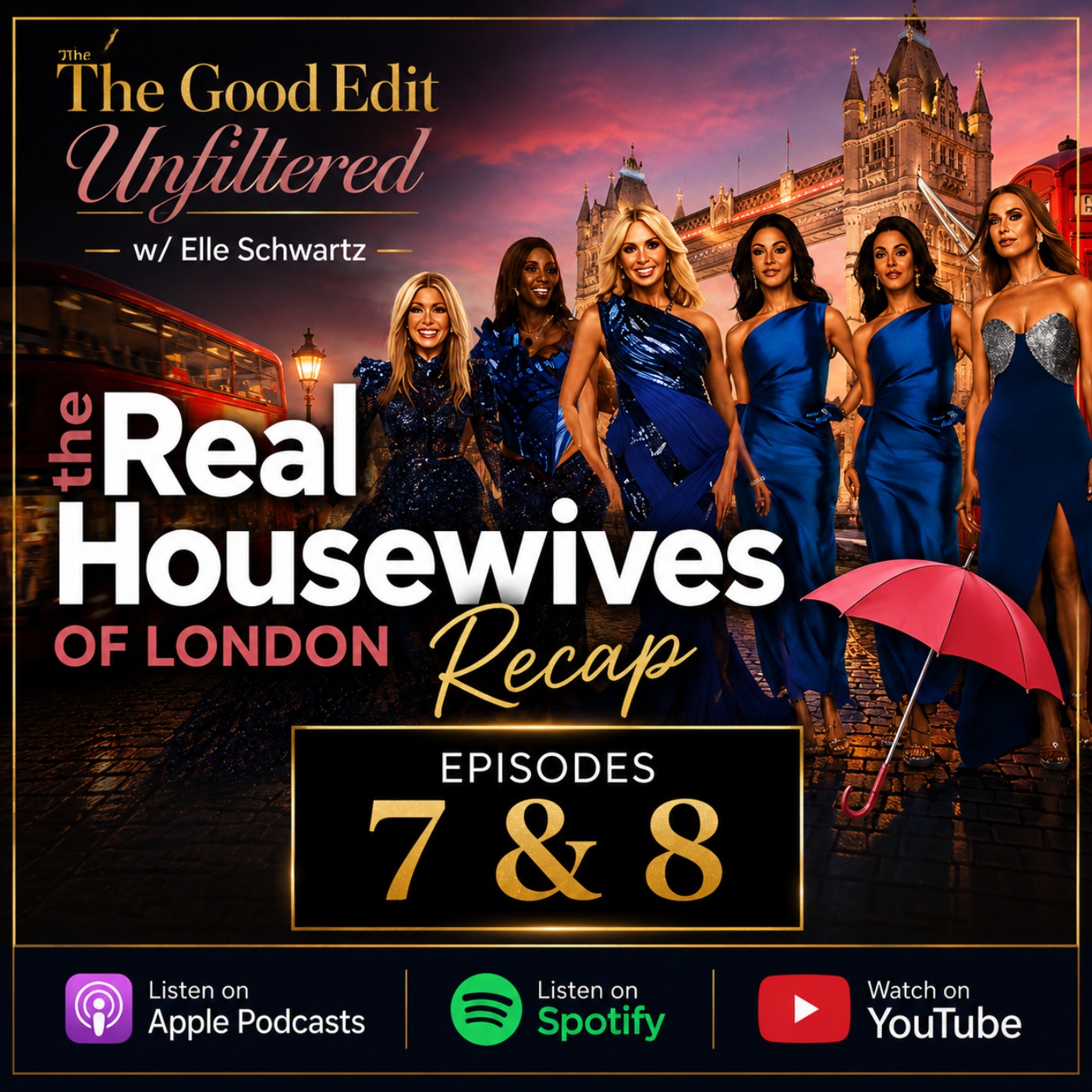
 Real Housewives of London Recap: Why Amanda Cronin Is the Engine, Not Just the Villain
Key Takeaways
- Elle Schwartz argues that Amanda Cronin is not just the season's villain, but the foundational engine and operating system of the entire Real Housewives of London season.
- Amanda treats friendship as a strict loyalty test with only one passing answer, leaving no room for a neutral middle ground among the cast.
- Unlike conflicts driven by temporary behavior, Amanda's confrontations routinely attack a person's class standing and social worth rather than their specific actions.
- Across multiple complex relationships, Amanda rarely completes a genuine apology, instead dominating exchanges until the other person offers one to her.
- The surprising alliance formed between Amanda and Panthea Parker after an initial class insult serves as one of the season's most revealing structural turns.
Real Housewives of London Recap: Why Amanda Cronin Is the Engine, Not Just the Villain _Elle Schwartz makes the case that Amanda Cronin isn't the season's villain — she's its operating system. | Spoiler note: this episode is based on the complete UK season, which aired on Hayu in 2025. The Bravo and Peacock run in the US is still in progress. If you're watching there and you're not caught up, save this one. Most Real Housewives of London recaps work scene by scene. This one doesn't. Elle Schwartz goes after the season's center of gravity instead, and argues it's Amanda Cronin — not as the woman throwing the sharpest lines, but as the one whose rules everyone else is playing by.
The distinction matters. A villain is a character you can remove. An engine is a mechanism the season runs on. Panthea Parker gets the ominous edit and the grenades, but take Panthea out of Season 1 and most of it still happens. Take Amanda out and the structure collapses, because nearly every conflict either begins with her, routes through her, or resolves only when she decides it has.
Elle breaks down the mechanism itself: Amanda treats friendship as a loyalty test with exactly one passing answer. There's no available position where you like Amanda and also like someone she's currently annoyed with. Spend time with the wrong woman and you've chosen a side, whether or not anyone told you a choice was being made. Both Juliets described this dynamic in near-identical terms after the season aired, which is either strong corroboration or coordinated messaging — Elle takes a position.
Then the three relationships, and how differently the same rule lands on each. Juliet Angus gets a belonging fight, rooted in postcode and geography, on damage that predates filming. Juliet Mayhew gets a character fight about whether her warmth is real, an accusation she couldn't identify weeks later. Panthea Parker starts on the receiving end of a class insult and ends up an ally, which is the season's most revealing turn and the one nobody talks about.
The through-line is that Amanda attacks standing rather than behavior. Not "you did something wrong" but "you are something lesser." That's why none of it resolves — you can apologize for an action, but not for who you are. Which leads to the finding Elle didn't expect going in: across three relationships, Amanda never completes an apology. She dominates the exchange until the other woman offers one instead.
Also covered: why Elle finds the class weaponization tacky rather than delicious, why every friendship in the cast becomes a referendum on Amanda, and what all of this predicts about the reunion.
KEY TOPICS
- Elle Schwartz argues Amanda Cronin is the true engine of the season, not simply its villain, and that the distinction changes how you read every fight
- Amanda's core pattern: friendship as a loyalty test with one acceptable answer
- The "queen of the group" framing that's followed Amanda since the show aired, and how much of it she actually claims versus how much has been handed to her
- The Amanda and Juliet Angus conflict as a belonging fight, rooted in classism, geography and what it means to claim London
- Why the Angus feud was already damaged before filming, making it a long thread rather than a one-off
- The Amanda and Juliet Mayhew conflict as a character fight about performed versus real warmth
- The Amanda and Panthea Parker arc, which opens as a class insult and converts into an alliance
- Across all three, Amanda attacks class standing rather than individual behavior
- Amanda rarely completes an apology, and frequently ends up extracting one instead
- The takeaway: the season's structure is built out of other women reacting to Amanda's rules
The Good Edit Unfiltered is where reality TV meets behavioral analysis. Behavioral analyst Elle Schwartz covers Married at First Sight (MAFS) Season 20 on Peacock, Love Island USA, and the Real Housewives universe (RHOBH, RHOP, RHOSLC, RHONY, RHONJ) plus Vanderpump Rules, Summer House, and Next Gen NYC. We break down the editing, casting, expert decisions, and psychology recap culture skips. We separate the edit from the reality.
New MAFS Season 20 breakdowns every Friday after the Thursday Peacock drop.
Ad free VIP content: https://www.patreon.com/c/TheGoodEditUnfilteredPodcast
Instagram @tge_thegoodeditunfiltered | YouTube @TheGoodEdit_Unfiltered | TikTok @tge.ufiltered
A Layered Media Works Inc. production. EP: Ric Swartzlander. Co EP & Creator: Elle Schwartz. On Air Talent & Assoc. Producer: Kimberly A. Bryant
Hosted on Acast. See acast.com/privacy for more information.
The Good Edit Unfiltered brings context to reality television, exploring how the housewife and reality TV experience is sometimes shifted unfairly through production edits. Hosted by behavioral analyst Elle Schwartz and Kat Vasseghi. A production of Layered Media Inc. and Rude Mood Media. Booking inquiries: Ric Swartzlander, ricswartzlander@thegoodedit.net. Bringing context to reality TV, one episode at a time.
Copyright 2026 Layered Media Inc. All rights reserved.
Frequently Asked Questions
Is Amanda Cronin the villain of Real Housewives of London?
While labeled a villain, behavioral analyst Elle Schwartz argues that Amanda is actually the season's core engine, meaning the entire structure and nearly all conflicts rely on her rules to function.
How does Amanda Cronin handle friendships on the show?
Amanda treats friendship as an absolute loyalty test with only one acceptable answer, forcing the other women to choose sides and punishing any association with someone she is currently upset with.
What is the nature of the conflict between Amanda Cronin and Juliet Angus?
Their feud manifests as a belonging fight rooted in classism, geography, and postcode differences, drawing on historical damage that predated the start of filming.
Why do Amanda Cronin's fights rarely get resolved?
Amanda tends to attack a person's inherent class standing and social status rather than isolated behaviors, making true resolution nearly impossible because people cannot apologize for who they are.