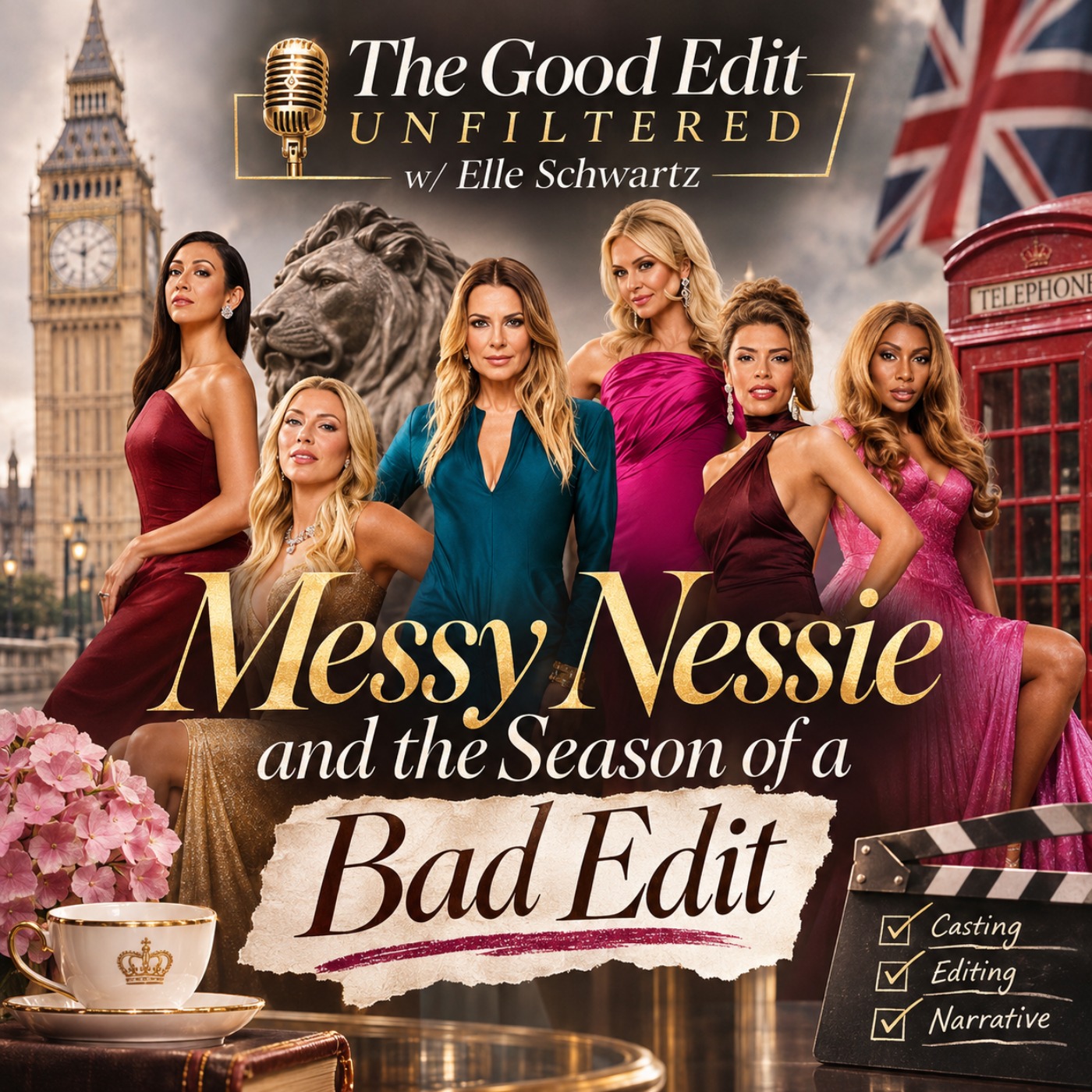
Anatomy of a Bravo Disaster: Why Juliet Mayhew's Real Housewives of London Edit Backfired
Juliet Mayhew's arrival on Real Housewives of London Season 2 delivered a masterclass in how production shaping and reality TV editing can construct an instantaneous villain and misfit arc. This behavioral breakdown explores how mismatched fashion choices, awkward group dynamics, and defensive reactions hand editors the exact footage needed to isolate a cast member on an island of their own making.
Key Takeaways
- Production choices heavily influence how a Housewife's introductory episodes are perceived by the audience.
- Juliet Mayhew's wardrobe selections and prop choices created an immediate disconnect with the rest of the London cast.
- Defensive behavioral responses to subtle social freezes often accelerate a cast member's isolation.
- Group dynamics on Real Housewives franchises frequently rely on a designated outsider to unify the core alliances.
- Understanding the edit helps viewers separate manufactured television drama from genuine interpersonal conflict.
The Anatomy of a Bad Edit: Setting Up Juliet Mayhew
When a new Housewife enters an established ensemble, the initial episodes are crucial for setting the tone of her entire season. For Juliet Mayhew, the opening of Season 2 of Real Housewives of London served up a challenging narrative hurdle. Editors carefully selected moments that emphasized her detachment from the group's aesthetic and social norms, crafting a narrative of isolation before she even had a chance to properly establish her footing.
Reality television editing is rarely accidental. Every lingering shot of an uncomfortable silence, every reaction cut to a sarcastic comment, and every juxtaposition of high-fashion environments against awkward props contributes to a specific archetype. In Juliet's case, the combination of wardrobe choices that failed to resonate with elite couture standards and unconventional staging—such as the infamous goldfish in a bag—gave production an effortless framework to paint her as entirely out of touch.
Wardrobe as a Narrative Tool and Social Armor
In the universe of the Real Housewives franchise, clothing is a universal language. It communicates status, belonging, and an understanding of the unspoken social contract among the women. When a cast member steps out in garments that the fashion community or her fellow cast mates visibly reject, it immediately signals vulnerability to the editing bay.
Juliet Mayhew's debut outfit choices became an easy target not just for Karen Loderick-Peace and the other women on screen, but crucially for the producers shaping the narrative. When a Housewife wears an outfit that feels entirely disconnected from the group's sophisticated backdrop, editors use reaction shots from peers to validate the narrative that this person does not fit in. It establishes a visual shorthand for the audience, ensuring that every subsequent interaction is viewed through the lens of an outsider struggling to keep up.
Behavioral Patterns of Isolation on Reality TV
From a behavioral analysis standpoint, watching a Housewife get iced out by an ensemble reveals fascinating group dynamics. Human psychology dictates that when an individual feels rejected or misunderstood, their defensive mechanisms typically manifest in one of two ways: hyper-aggression or immediate withdrawal.
Juliet found herself oscillating between trying to force a reconciliation and reacting defensively when her overtures fell flat. On reality television, defensiveness is absolute gold for producers. It justifies the group's decision to distance themselves and provides the narrative momentum needed for dramatic blowups, such as her explosive confrontation with Panthea Parker.
The Role of the Group Outsider in Franchise Longevity
Every successful Real Housewives franchise requires a designated outsider to function properly. Without a focal point for tension, groups tend to stagnate into polite brunch scenes and manufactured harmony. Nessie Welschinger and Juliet Mayhew found themselves trading the burden of this role throughout the premiere episodes.
When a cast member is thrust onto an island away from the core alliances, the psychological toll is immense. They must either find a strategic ally—as Nessie attempted by making calculated moves against Juliet Angus and navigating the seating arrangements with Panthea Parker—or accept the villain edit. Juliet Mayhew's struggle highlights the difficulty of breaking out of a production-assigned box once the narrative momentum begins rolling downhill.
Conclusion: Look Beyond the Cut
Reality TV editing remains an invisible hand guiding our reactions, sympathies, and frustrations every single week. Juliet Mayhew's rough start in London proves that even seasoned personalities can fall victim to a carefully constructed bad edit when behavioral reactions align too perfectly with production's storyline goals. To get a complete breakdown of how these storylines were dissected, analyzed, and contextualized, Listen to the full episode of The Good Edit Unfiltered.
Join Elle Schwartz daily for deep behavioral insights, cast dynamic breakdowns, and the sharpest reality TV analysis across all your favorite Bravo and streaming franchises.
Frequently Asked Questions
What makes a reality TV edit "bad" for a cast member?
A bad edit occurs when production selectively highlights awkward moments, negative reaction shots, and defensive behavior while omitting positive context, making a cast member appear unlikable, out of touch, or entirely isolated from the group.
How do fashion choices impact a Housewife's narrative arc?
Wardrobe serves as visual shorthand on reality television. When a cast member's style clashes with the group's aesthetic or fails to meet expected luxury standards, editors use it to visually reinforce storylines about the person being an outsider.
Why do reality shows need a designated outsider?
An outsider gives the ensemble a focal point for conflict and tension, preventing the group from becoming too stagnant and providing narrative drive for episodes and seasons.
Where can I listen to behavioral analyses of Bravo shows?
You can listen to daily breakdowns on The Good Edit Unfiltered, hosted by behavioral analyst Elle Schwartz, covering the Real Housewives, Summer House, Love Island USA, and more.