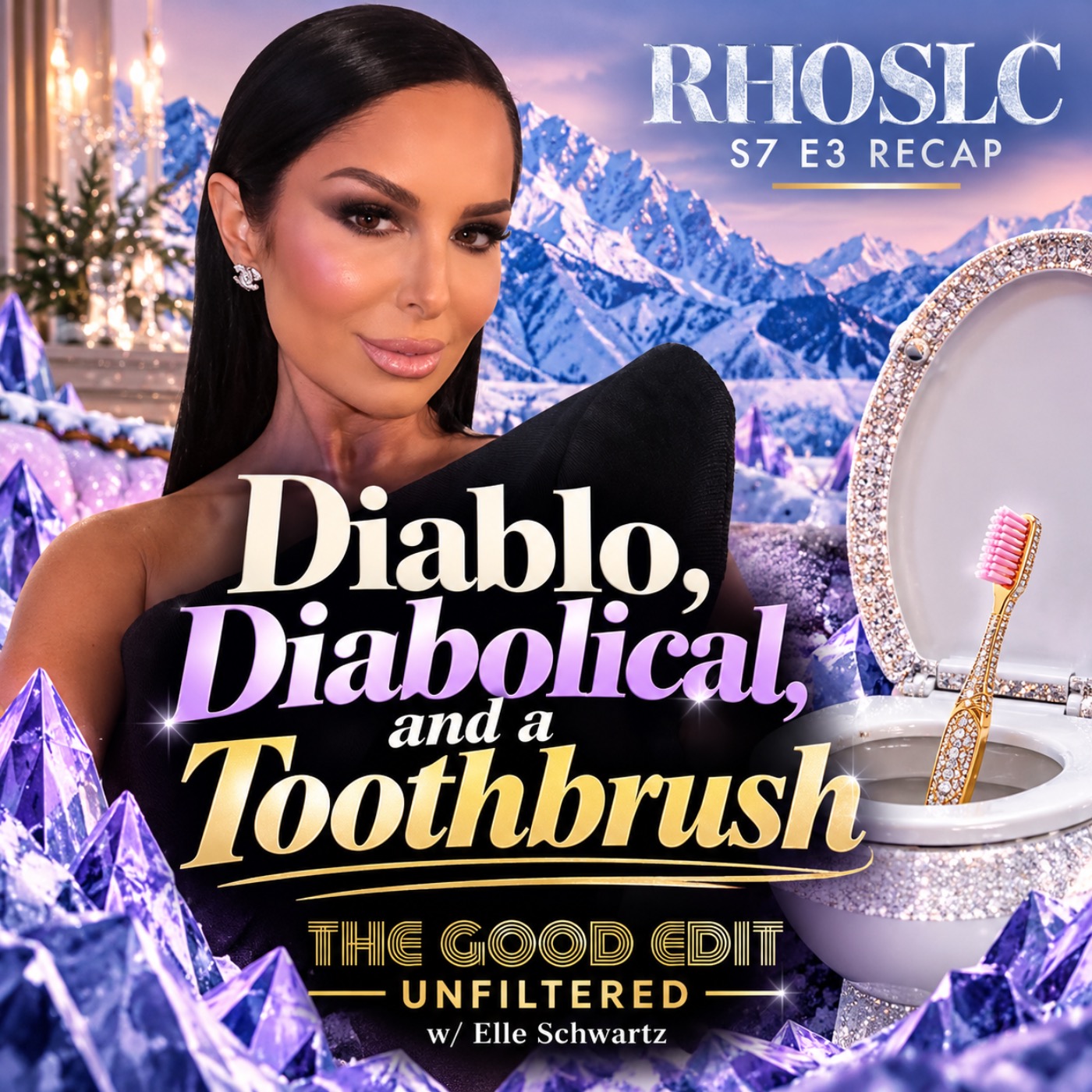
How Reality TV Editing Weaponizes Misheard Words: The RHOSLC San Francisco Trip Breakdown
When a single misheard word can shift a reality TV storyline overnight, viewers often blame the cast members, but behavioral analysis reveals a much more calculated mechanism at play. On the recent Real Housewives of Salt Lake City San Francisco trip, a linguistic slip involving the word 'diablo' cascaded into a group-wide fallout, showcasing how the edit weaponizes everyday miscommunications to manufacture dramatic tension and isolate newcomers.
Key Takeaways
- Misheard words in reality TV are frequently exploited by production cuts to escalate minor social frictions into major conflicts.
- Newcomers to established reality franchises like RHOSLC face steep tactical disadvantages when private confidences are weaponized across social circles.
- Behavioral analysis of information flow reveals who actively moves gossip versus who remains conveniently absent from the room.
- Linguistic escalation transforms playful self-deprecation by a cast member into heavy-handed narrative labels.
- Strategic alignment shifts happen rapidly during cast trips, altering alliances faster than standard episodic editing lets on.
The Anatomy of a Misheard Word
Language on reality television rarely functions as a simple exchange of meaning; instead, it operates as raw material for story editors. During the Salt Lake City cast excursion to San Francisco for St. Patrick's Day, newcomer Ashley Quai found herself at the center of an unexpected firestorm. The catalyst seemed harmless enough on paper: a casual linguistic choice that got warped in transit between cast members.
When Quai used the term 'diablo,' the phrase did not simply linger in the air as a quirky descriptor. It was picked up, filtered through another cast member's perception, and drastically inflated into 'diabolical.' In behavioral terms, this represents a classic escalation loop. The original speaker uses a colloquial or dramatic flair, a third party mishears or overinterprets the tone, and the production team highlights the altered version to establish a premeditated character arc for the newcomer.
Linguistic Inflation in Production
Editors rely heavily on linguistic inflation to keep viewers engaged. By taking a minor comment and routing it through multiple confessionals, the show builds artificial momentum. Viewers watching at home absorb the repeated word—in this case, diabolical—until it hardens into an established truth about the cast member's character. Understanding this process requires looking past the surface drama to trace how information travels from one interaction to the next.
Behavioral Analysis of Information Flow
To truly understand how drama unfolds on the Real Housewives, one must ask a fundamental question: who moved the information? In group dynamics, gossip does not travel on its own; it requires active couriers who choose to cross social boundaries. On this particular trip, private stories shared in confidence were quickly handed off to other factions within the group.
Behavioral analyst Elle Schwartz emphasizes that observing who was absent from the room when information moved is just as important as identifying who carried the message. When alliances shift under pressure, the physical architecture of the scene tells a story. Viewers frequently miss how spatial dynamics—who sits next to whom, who whispers across a hotel table, and who stands outside the immediate circle—signal upcoming shifts in group power.
The Tactics of Newcomer Survival
Entering an established reality television ensemble requires immense psychological resilience. Veterans know the unspoken rules of engagement, whereas newcomers often attempt to navigate tricky waters with transparency and humor. When Ashley Quai attempted to own the narrative, laugh first, and defuse the tension surrounding the toothbrush distribution stunt, her approach clashed directly with the dramatic framing the editors needed.
Despite handling the initial confrontation with poise, Quai ended the night in emotional distress. This contrast between an outward display of resilience and an internal breaking point is a hallmark of how reality TV edits process newcomers. The show sets up a scenario where emotional survival is nearly impossible without alienating either the veteran core or the auxiliary cast members.
Shifting Alliances in San Francisco
Location shoots like the San Francisco trip serve as pressure cookers designed to accelerate relationship dynamics. Away from their normal routines, the women are forced into close quarters, making it easier for production to orchestrate confrontations. What started as an introductory welcome for a newcomer quickly devolved into a masterclass in social displacement.
Notice how rapidly loyalty shifts when pressure mounts. A newcomer who enters the trip aligned with one veteran can easily find themselves completely isolated by evening, pivoting toward entirely different power players like Lisa Barlow or Meredith Marks just to find a safe harbor. These rapid realignments expose the fragility of the group's internal ecosystem and highlight why behavioral tracking is essential for decoding what actually happened versus what aired.
Conclusion
Reality television is constructed brick by brick, and misheard words are often the mortar holding artificial conflicts together. By examining the mechanics behind linguistic inflation and information movement, viewers can appreciate the complex social chess game happening beneath the surface of their favorite shows. For a comprehensive, scene-by-scene breakdown of how these dynamics played out during the episode, be sure to read the full analysis and Listen to the full episode. Join the community of analytical reality TV fans and explore more deep-dive recaps today.
Frequently Asked Questions
How do reality TV editors use misheard words to build drama?
Editors amplify minor linguistic slips by routing them through multiple confessionals and contrasting them with exaggerated reactions from other cast members, turning casual remarks into major plot points.
Why is tracking information flow important when analyzing reality shows?
Tracing who shares secrets and who is absent during key conversations reveals the underlying strategy behind group conflicts and exposes manufactured storylines.
What makes group trips like the San Francisco getaway a catalyst for conflict?
Production-mandated proximity and removal from normal daily routines create high-pressure environments where minor social frictions quickly escalate into dramatic confrontations.
How do newcomers typically misjudge established reality ensemble dynamics?
Newcomers often rely on transparency and humor to defuse tension, underestimating how deeply entrenched veteran alliances and editorial narratives already are.