Decoding Amanda and Wes's Double Life: Loyalty vs. Deception on 'In the City'
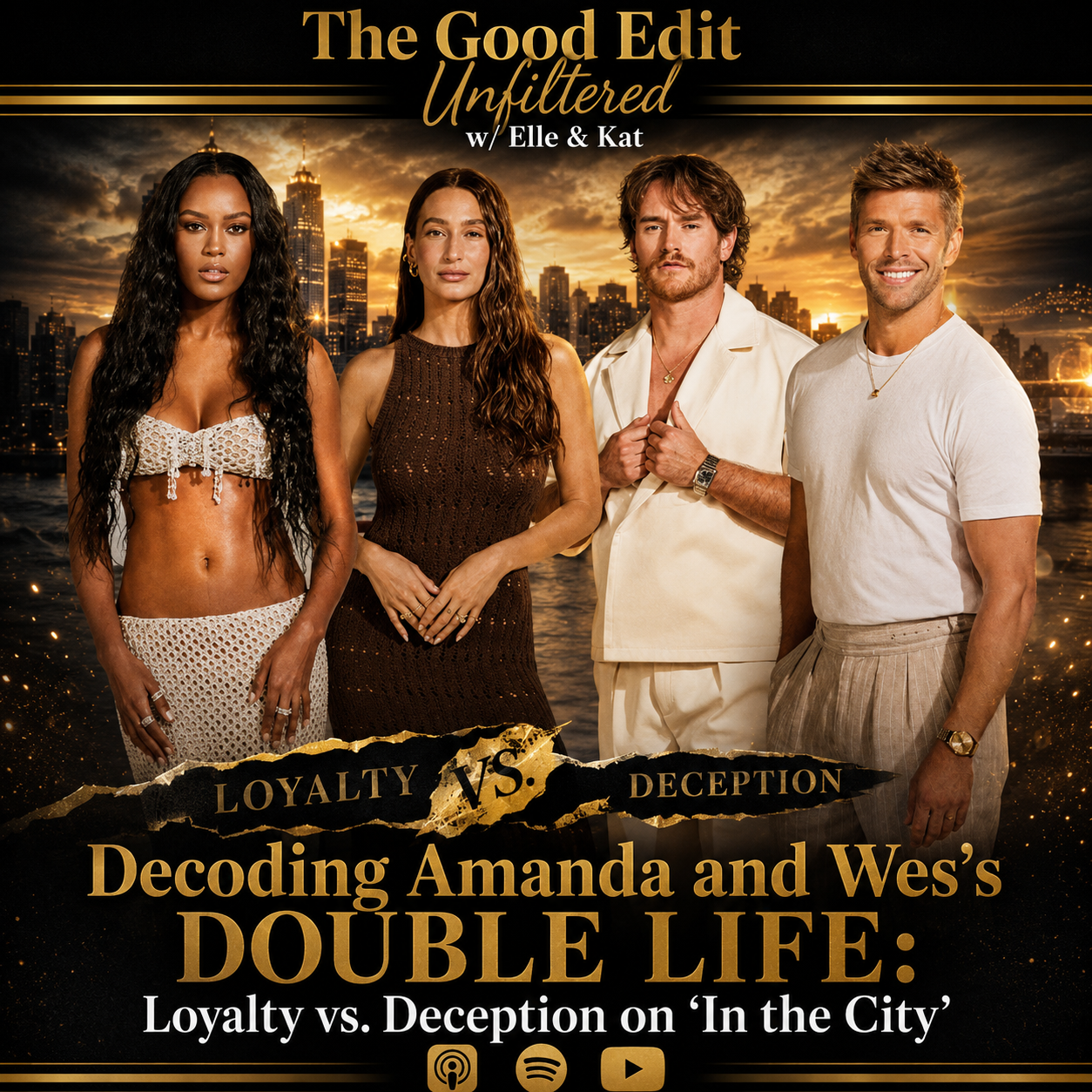
Amanda West Loyalty Deception | Unraveling the complex dynamics between Amanda and Wes on 'In the City' reveals a masterclass in toxic relationship cycles and manipulative behavior. This post dives deep into the psychological games at play, dissecting how apparent victimhood masks secret infidelity and exploring the blurred lines of loyalty and deception that define their tumultuous relationship.
Key Takeaways
- Amanda's narrative of being wronged by her husband is undermined by her own secret affair with Wes.
- The 'In the City' drama highlights how individuals can project their own negative behaviors onto others.
- Toxic relationship cycles are perpetuated by a lack of self-awareness and a tendency towards manipulation.
- Understanding the psychology behind these dynamics offers insights into real-world relationship patterns.
- The edit often serves to create heroes and villains, but the reality behind Amanda and Wes's story is far more nuanced.
The Irony of Amanda's Accusations
On the surface, the 'In the City' storyline involving Amanda, her husband, and Wes presents a seemingly straightforward narrative of betrayal. Amanda is positioned as the wronged party, a victim of her husband's infidelity. However, as Elle and Kat meticulously unpack in 'The Good Edit Unfiltered,' the reality is far more convoluted and, frankly, hypocritical. The core of their analysis centers on the astonishing contradiction: Amanda, while seemingly devastated by her husband's actions, is simultaneously engaged in a secret affair with Wes, a man seemingly close to the situation, mirroring the very behavior she condemns.
This isn't just a simple case of tit-for-tat cheating. It's a deep dive into psychological projection and the intricate ways individuals construct narratives to absolve themselves of responsibility. The hosts dissect how Amanda leverages her victim status while actively participating in deceit, creating a complex web of lies. This dual role is crucial to understanding the 'In the City' recap, as it moves beyond surface-level drama to explore the motivations and psychological underpinnings of such contradictory behavior. The irony is palpable: the person crying foul is simultaneously playing the game, and often with a level of intensity that suggests a profound lack of self-awareness or a deliberate manipulation of perception.
Unraveling the Toxic Relationship Cycle
The dynamic between Amanda and Wes, as explored in the episode, serves as a potent case study in toxic relationship cycles. These cycles are characterized by a pattern of unhealthy behaviors that trap individuals, often leaving them feeling confused, hurt, and powerless. In Amanda and Wes's situation, the cycle appears to be fueled by several factors:
Projection and Gaslighting
One of the most significant elements is psychological projection. Amanda's outrage towards her husband's infidelity, while potentially valid in its initial expression, takes on a different dimension when she herself is engaged in a similar, clandestine act. This behavior often stems from a subconscious need to deflect from one's own shortcomings. By loudly condemning her husband, she may be attempting to paint herself as morally superior, diverting attention from her own deceptive actions with Wes. This can be a subtle form of gaslighting, not necessarily directed at her husband, but at the audience and potentially even herself, creating a false reality where her own actions are somehow justified or less significant.
The Allure of Forbidden Romance
The clandestine nature of Amanda and Wes's affair likely adds an element of excitement and perceived validation that is missing from Amanda's primary relationship. In toxic dynamics, the thrill of secrecy and the intensity of forbidden connection can become addictive. This doesn't excuse the behavior, but it helps explain the allure. It taps into a desire for passion, attention, or perhaps a form of rebellion against perceived marital dissatisfaction. The hosts of 'The Good Edit Unfiltered' touch upon how these elements can contribute to the longevity of such destructive patterns, making it difficult for individuals to break free even when the consequences are damaging.
Blurred Lines of Loyalty and Deception
The narrative meticulously dissects how loyalty is twisted and redefined within this context. Amanda's apparent loyalty to her marital vows is clearly compromised by her affair. Simultaneously, her relationship with Wes, built on secrecy and shared deception, presents a warped sense of loyalty. Are they loyal to each other in their shared secret, or are they simply using each other to navigate their primary relationship issues? The episode suggests the latter, highlighting how deception becomes the primary currency in their interactions, eroding any genuine foundation of trust or commitment.
Behind the Edit: Understanding the Narrative
Reality television, by its very nature, relies on editing to craft compelling narratives. 'The Good Edit Unfiltered' excels at looking beyond the surface to understand how these stories are constructed and what they reveal about human behavior. In the case of Amanda and Wes, the editing likely plays a crucial role in shaping audience perception. Initially, Amanda might be presented solely as the sympathetic victim, drawing viewers' empathy.
However, as the truth about her affair with Wes emerges, the narrative must adapt. This is where the hosts' analysis becomes invaluable. They explore the implications of this revelation: how it reframes Amanda's previous victim narrative, how it exposes the selective storytelling often employed in reality TV, and what it truly signifies about the characters involved. The episode doesn't just recap events; it deconstructs the storytelling process itself. By examining the contradictions and the apparent psychological games, listeners gain a deeper understanding of the human element behind the polished, and often misleading, on-screen portrayal. It’s about recognizing that the 'villain' or 'hero' labels are often manufactured, and the reality is far messier and more complex.
Lessons Beyond the Screen
While 'In the City' offers dramatic entertainment, the dynamics explored by Elle and Kat hold profound lessons applicable to real-world relationships. Understanding the signs of toxic relationship cycles, the psychological games of projection and manipulation, and the consequences of deception can equip individuals with greater self-awareness and the ability to identify unhealthy patterns in their own lives or relationships.
The episode encourages listeners to question the narratives they are presented with, both on-screen and off. It underscores the importance of self-awareness and accountability in relationships. When individuals fail to acknowledge their own contributions to relationship problems, they perpetuate cycles of conflict and unhappiness. Amanda and Wes's story, as complicated as it is, serves as a stark reminder that true resolution often requires confronting uncomfortable truths about oneself, not just about others. The desire to understand the 'why' behind such complex behavior is what elevates this discussion beyond mere gossip into a valuable exploration of human psychology and relational dynamics.
To get the full, in-depth breakdown of Amanda and Wes's complicated situation and the psychological intricacies involved, Listen to the full episode on 'The Good Edit Unfiltered.' You'll gain a new perspective on loyalty, deception, and the narratives we buy into.
Frequently Asked Questions
What are the key signs of a toxic relationship cycle?
Key signs include constant conflict without resolution, manipulation (like gaslighting), a lack of trust, unhealthy communication patterns, codependency, and feeling emotionally drained or controlled within the relationship.
How does projection manifest in relationships like Amanda and Wes's?
Projection occurs when someone unconsciously attributes their own unacceptable thoughts, feelings, or behaviors to someone else. In this case, Amanda's strong condemnation of her husband's infidelity may be a projection of her own guilt and deceit regarding her affair with Wes.
Why is self-awareness crucial in avoiding toxic relationship patterns?
Self-awareness allows individuals to recognize their own roles, behaviors, and emotional triggers within a relationship. Without it, people are more likely to repeat unhealthy patterns, blame others exclusively, and fail to address the root causes of conflict, thus perpetuating toxic cycles.
Can reality TV editing deliberately create a false perception of characters?
Absolutely. Reality TV editing can selectively present footage, use music, and craft storylines to emphasize certain aspects of a person's behavior while downplaying or omitting others, thereby manufacturing hero or villain narratives to enhance drama and viewer engagement.

Creator | Host | Co-Executive Producer
Kat Vasseghi is a Bravo Commentator and the co-creator and co-host of The Good Edit w/ Elle & Kat, a culture-forward podcast where reality TV meets psychology, sociology, and sharp analysis. Previously known for her brand BravoRecs, Kat brings years of fluency in the Bravo universe its personalities, storylines, and fandoms paired with quick wit and a fan's instinct for the moments that matter. As a Bravo Commentator, she turns each recap into something sharper and more revealing than the average reaction show.
Known for her humor and culturally fluent takes, Kat reads the Bravo universe through the lens of the fans who live in it, catching the shifts and subtext other recaps miss. Alongside co-host Elle Schwartz, she co-created The Good Edit w/ Elle & Kat, blending cultural fluency, sharp humor, and elevated Bravo commentary into one of the most refreshing new voices in the reality TV podcast space.