Rachel Uchitel's Strategic Use of 'The Pause' in Live Stream Communication with David Yontef

In a recent live stream, Rachel Uchitel skillfully employed 'the pause' as a communication tactic when interacting with David Yontef. This technique allowed her to control the narrative and manage potentially uncomfortable questions with remarkable precision. Analysis from The Good Edit Unfiltered podcast illuminates this subtle yet powerful strategy.
Key Takeaways
- Rachel Uchitel strategically uses pauses to collect her thoughts and control the pace of the conversation with David Yontef.
- These pauses act as a subtle boundary-setting mechanism, signaling discomfort or a need to reframe a question.
- Uchitel's deliberate silences often precede a redirection or a nuanced response, preventing direct confrontation.
- The effectiveness of 'the pause' in this context demonstrates a sophisticated approach to managing interview dynamics.
- This communication style, explored on The Good Edit Unfiltered podcast, offers insights into how individuals can assert control during challenging interviews.
The Power of the Pause in Dialogue
The dynamic between Rachel Uchitel and David Yontef during their recent live stream, as deconstructed on The Good Edit Unfiltered podcast, offered a compelling case study in verbal and non-verbal communication strategies. While Yontef is known for his direct questioning, Uchitel's responses were marked by a remarkable control over the conversational flow, particularly through her adept use of 'the pause.' This wasn't a passive silence, but an active, deliberate interlude that served multiple strategic purposes. In essence, Uchitel weaponized silence, transforming it into a tool for introspection, redirection, and boundary assertion. It's a technique that speaks volumes without uttering a single word, allowing her to process, formulate, and ultimately shape the direction of the dialogue on her own terms. The hosts of The Good Edit Unfiltered, Elle and Kat, often highlight how reality TV figures navigate difficult conversations, and Uchitel's performance here was a prime example of sophisticated personal management under the glare of public scrutiny.
Creating Space for Thought and Control
One of the most significant functions of Uchitel's pauses was the immediate creation of psychological space. When faced with a question that was particularly pointed, accusatory, or simply ventured into territory she preferred to avoid, Uchitel would often pause. This wasn't a hesitant pause, but a measured one, signaling that she was not going to be rushed into an answer. This brief period of silence allowed her to compose herself, consider the implications of her potential response, and, crucially, regain a sense of control over the interaction. It's a subtle way of communicating, 'I hear your question, but I will answer it when I am ready, and on my terms.' This contrasts sharply with an immediate, perhaps defensive, reaction, which can often cede conversational power. By simply waiting, Uchitel put the onus back on Yontef, implicitly suggesting that the pace of the interview was, in part, dictated by her. This is a nuanced form of assertiveness that avoids overt conflict while still firmly establishing her dominance in the conversational exchange.
The Pause as a Boundary Indicator
Furthermore, Uchitel's pauses often served as a clear, albeit unspoken, signal of boundary. In the context of interviewing, a pause can be interpreted in various ways: surprise, consideration, or even mild offense. Uchitel seemed to leverage this ambiguity. A pause following a sensitive question could signal that the question was indeed crossing a line, prompting Yontef to perhaps reconsider his approach or backpedal. It acts as a non-verbal cue that the interviewer is treading on delicate ground. Instead of directly stating, 'That question is inappropriate,' Uchitel's silence invited the interviewer to self-correct. This is a masterful application of social intelligence, understanding that direct confrontation is not always the most effective way to manage personal boundaries. The unspoken message conveyed by the pause is often more potent than any spoken word, as it forces the other party to interpret the silence and, potentially, adjust their behavior accordingly. The hosts of The Good Edit Unfiltered podcast frequently discuss the unspoken dynamics at play in reality television interviews, and Uchitel's use of the pause exemplifies this hidden layer of communication.
Reframing and Redirecting Post-Pause
Crucially, Uchitel's pauses were rarely followed by a direct, unadorned answer to the question that prompted them. Instead, the pause often served as a prelude to a reframed question or a redirection of the conversation. For instance, if Yontef asked a question implying a specific past action or motive, Uchitel might pause, then respond not with a factual account, but with a commentary on how public perception is often skewed, or how past events are often misinterpreted. The pause gave her the time to construct this more generalized, less personally revealing response. It's a strategic move that allows her to acknowledge the question's existence while completely circumventing the direct engagement with its sensitive core. This technique transforms the interview from an interrogation into a more controlled discussion, where Uchitel dictates the terms of engagement by skillfully using the silence preceding her every carefully chosen word. This method of communication, focusing on controlling the narrative through deliberate pauses and subsequent reframing, is a key element of Uchitel's communication style that merits closer examination.
The Psychology of Deliberate Silence
The psychological impact of Uchitel's pauses cannot be overstated. In Western communication norms, silence is often perceived as awkward or indicative of a lack of knowledge or guilt. However, Uchitel subverted this expectation by imbuing her pauses with intent and control. This deliberate silence can create anticipation, forcing the listener (and interviewer) to lean in, metaphorically speaking, waiting for what will come next. This heightened state of attention can make the subsequent statement, even if it's a deflection, seem more impactful. It also subtly shifts the power dynamic; the person who controls the silences often controls the conversation. It's a sophisticated tactic that requires confidence and self-awareness, qualities that Uchitel demonstrated throughout the live stream. The hosts of The Good Edit Unfiltered podcast, Elle and Kat, often explore the psychological underpinnings of reality TV personalities' interactions, and Uchitel's calculated use of pauses provides a rich vein for such analysis. It highlights how individuals can effectively manage their public image and personal narratives by mastering the art of communication, including the potent use of silence.
Conclusion: The Strategic Art of Uchitel's Communication
Rachel Uchitel's engagement with David Yontef in the recent live stream provided a masterclass in strategic communication, with her adept use of 'the pause' being a standout technique. Far from being mere moments of silence, these deliberate pauses served as powerful tools for thought, boundary setting, and narrative redirection. They allowed Uchitel to maintain composure, control the interview's pace, and artfully sidestep potentially invasive questions without resorting to overt confrontation. This nuanced approach underscores a sophisticated understanding of interpersonal dynamics and interview management. For a deeper dive into these and other communication tactics employed by reality TV figures, be sure to listen to the full discussion on The Good Edit Unfiltered Podcast, where Elle and Kat break down these fascinating dynamics episode by episode. You can find our latest episodes here.
Frequently Asked Questions
What is 'the pause' as a communication tactic?
In communication, 'the pause' refers to a deliberate and strategic period of silence used to control conversational flow, gather thoughts, set boundaries, or emphasize a point. It is an active communication tool, not passive silence.
How did Rachel Uchitel use 'the pause' with David Yontef?
Rachel Uchitel strategically used pauses to avoid answering certain questions directly, to collect her thoughts, and to signal that she was setting boundaries or redirecting the conversation, thereby maintaining control of the interview dynamic.
Why is using 'the pause' effective in interviews?
It can be effective because it prevents rushed answers, allows for thoughtful responses, subtly shifts conversational power to the interviewee, and can signal discomfort or a boundary without direct confrontation, prompting the interviewer to adjust their approach.
Does using 'the pause' always mean someone is deflecting?
Not necessarily. While it can be used for deflection, pauses can also indicate deep thought, a desire for clarification, or genuine surprise. The context and what follows the pause are crucial in determining its intent.
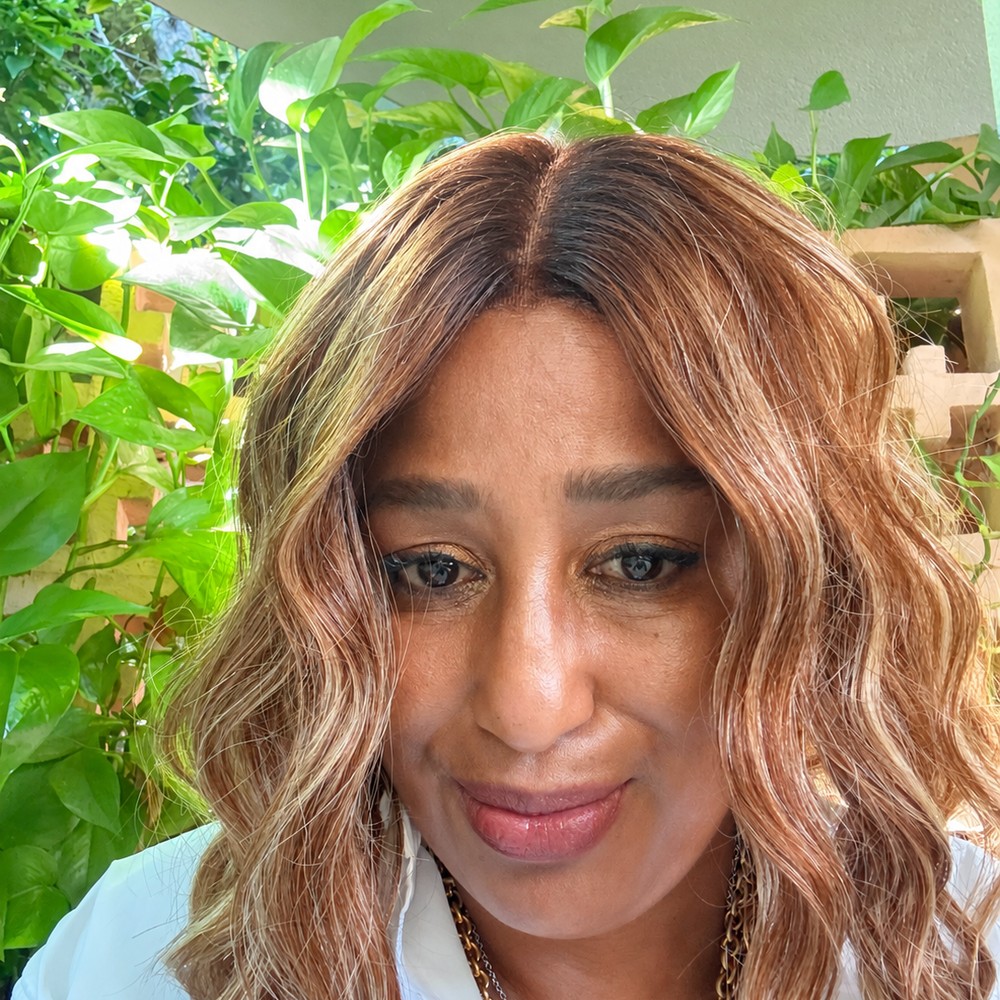
Creator | Host | Co-Executive Producer
Elle Schwartz is a behavioral analyst, writer, and the creator, host, and executive producer of The Good Edit Unfiltered, an award winning podcast that brings context to reality television. Born in Compton, California, she holds five degrees from private institutions, including the University of Southern California, and draws on her background in behavioral science to examine how production edits shape the stories audiences see on screen.
Launched in February 2026, The Good Edit Unfiltered covers The Real Housewives franchises, Vanderpump Rules, Summer House, The Valley, and Married at First Sight.
The show is produced under Layered Media Inc. and Rude Mood Media, with Schwartz serving as executive producer alongside Ric Swartzlander. Its signature series, the Reality TV Cultural Reckoning, and its Grammar of Conflict framework explore how race, culture, and casting influence the way reality stars are portrayed.
In its first year, the podcast won three 2026 Black Podcasting Awards (Best Producer, Best Daily Podcast, and Original Music) and multiple 2026 Davey Awards, including Gold for the Reality TV Cultural Reckoning series. It ranks number 1 all time in Indie Real Housewives on Goodpods.
Schwartz is a member of the Television Critics Association and a founding member and judge of the Open Podcast Awards. She is also a credited co writer on Kyla & the White Guy, a scripted comedy series optioned by Roku. She lives in Encino, California.
Short bio (for spots with tight character limits)
Elle Schwartz is a behavioral analyst, writer… Read More