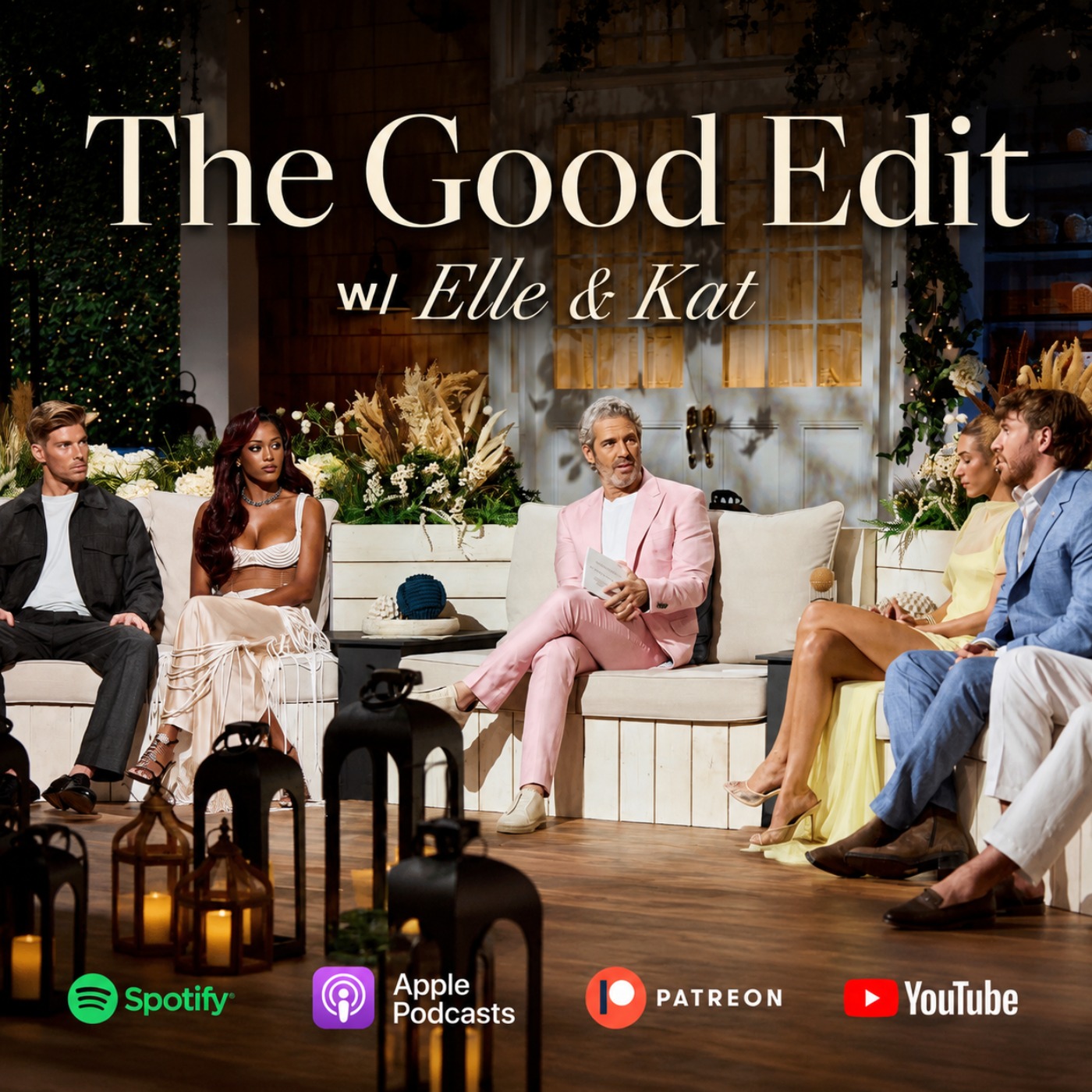
Are 'Friendship Contracts' the Real Secret to Healthy Boundaries on Reality TV?

Friendship Contracts Boundaries | This post delves into the concept of 'friendship contracts' as a humorous yet insightful tool for navigating toxic dynamics on shows like 'In the City.' We explore how exaggerated boundaries and the need for explicit agreements highlight the challenges of maintaining genuine connections amidst manufactured drama and competitive relationships on Bravo.
Key Takeaways
- The "friend contract" concept humorously illustrates the breakdown of healthy boundaries in reality TV friendships.
- Lindsey's attempts to enforce boundaries often become overly forceful, creating new interpersonal conflicts.
- The "Just Shut the Fuck Up" clause highlights the desire for individuals to self-regulate without constant external intervention.
- Reality TV thrives on blurred lines, making explicit contracts a fantasy but a useful analytical lens.
- The podcast hosts analyze how manufactured drama exacerbates pre-existing relational issues.
The Unspoken Rules of Bravo Friendships
Reality television, particularly the Bravo Cinematic Universe, thrives on interpersonal drama. "In the City" is no exception, presenting a season packed with entangled friendships, strained marriages, and explosive confrontations. While we tune in for the drama, the podcast "The Good Edit Unfiltered" with Elle and Kat often dissects the underlying psychological dynamics at play. One recurring theme, highlighted in their deep dive into "In the City's" latest season, is the complex and often dysfunctional nature of friendships on these shows.
The episode touches upon the breakdown between Danielle and Lindsey, a situation that exemplifies the challenges of maintaining healthy boundaries in intensely scrutinized relationships. Lindsey, described by the hosts as grappling with how her "best friend" has "shattered" significant life moments, is portrayed as struggling to enforce her boundaries. However, the podcast's commentary suggests that her approach, while stemming from a desire for self-protection, can veer into creating "weird and not healthy boundaries." This leads to a particularly memorable, tongue-in-cheek suggestion from the hosts: perhaps all "friendship contracts" need a specific clause – the "Just Shut the Fuck Up" clause.
Deconstructing the 'Friendship Contract'
The idea of a "friendship contract" is, of course, a hyperbolic concept born from the absurdity of reality TV relationships. It's not about literal legal documents, but rather a metaphorical framework to understand where things go wrong. In the context of "In the City," the Danielle and Lindsey saga serves as a case study. Lindsey's critiques of Danielle's actions might be valid, but the podcast suggests that her *delivery* and *frequency* of these critiques become counterproductive. Instead of fostering understanding, it escalates conflict and creates resentment.
The "Just Shut the Fuck Up" clause, as humorously proposed by Elle and Kat, speaks to a deeper frustration many viewers likely feel when watching these dynamics unfold. It represents the desire for individuals to take ownership of their own emotional journeys and allow their friends to navigate their lives, mistakes and all, without constant external judgment or unsolicited advice. It’s a plea for personal accountability and the space to make one's own choices, even if those choices are perceived as detrimental by others.
Lindsey's Boundary Battle
Lindsey's struggle with Danielle highlights a common pitfall in friendships: the overreach of good intentions. While setting boundaries is crucial for self-preservation and maintaining respect within a relationship, the line between asserting needs and controlling another person's behavior can become blurred. The podcast's analysis implies that Lindsey, in her attempt to protect herself from being hurt by Danielle, inadvertently adopts a more controlling stance. This can manifest as micromanaging a friend's decisions or constantly pointing out their flaws, which, paradoxically, can push the friend further away or lead to more significant conflict.
The hosts, with their background in behavioral analysis, offer a nuanced perspective. They acknowledge the validity of Lindsey's feelings and her need to protect herself. However, they also point out that the *method* of boundary enforcement matters. When boundaries are communicated through constant criticism or a perceived sense of superiority, they can feel like attacks rather than expressions of personal needs. This is where the "friendship contract" idea, however outlandish, becomes a useful tool for analysis – it forces us to ask: what are the explicit agreements needed for these individuals to coexist healthily?
The Performative Nature of Reality TV Friendships
It's crucial to remember that "In the City," like most Bravo shows, is a produced entity. The relationships, while often rooted in genuine connections, are amplified and edited for maximum dramatic impact. The "performative dynamics" mentioned in the episode's description are not necessarily fake, but they are certainly heightened. Friendships become storylines, and conflicts are strategically highlighted to create compelling television.
In this environment, the concept of a "friendship contract" takes on an even more complex meaning. The characters are not just navigating personal relationships; they are also performing for an audience and for the cameras. This can lead to situations where individuals behave in ways that serve the narrative, potentially at the expense of authentic connection. The podcast's analysis of the Ciara, West, and Amanda triangle, described as a "bizarre, performative storyline," underscores this point. The intensity and public declarations suggest a focus on crafting a compelling narrative rather than simply experiencing genuine emotion.
When Good Intentions Go Wrong
The "Just Shut the Fuck Up" clause isn't advocating for apathy or a lack of care. Instead, it's a call for trusting friends to manage their own lives and for the person offering advice to recognize when their input is no longer helpful, or even welcome. It’s about understanding that true friendship often involves allowing space for growth, even if that growth involves making mistakes. The podcast suggests that Danielle's return with a "wide and big" smile at the Boozy Brunch, despite the drama, hints at a desire for reconciliation, but the path there is complicated by ongoing boundary issues.
The episode also touches on other relationship dynamics that illustrate similar themes of misplaced intentions or a lack of depth. Frank and Lindsey's pairing is described as "high-heat, low-substance," with Frank's focus on working out during a date highlighting a superficial approach. More poignantly, Whitney's devastating realization about Kenny's lack of commitment, after she "uprooted her whole life," shows the profound consequences of investing in relationships without clear understanding or mutual investment. Kenny's label as a "show pony and a commitment phobe" suggests a pattern of performative behavior without genuine substance.
Finding Healthy Dynamics in Reality TV
While the "friendship contract" remains a humorous hypothetical, the underlying issues it represents are very real. The podcast "The Good Edit Unfiltered" excels at peeling back the layers of reality TV to reveal the human psychology beneath the manufactured drama. The hosts, Elle Schwartz and Kat Vasseghi, use their expertise to analyze how editing, casting, and production strategies shape narratives, but they never lose sight of the emotional realities of the individuals involved.
The discussions on "In the City" serve as a reminder for viewers that while these shows are entertaining, they also offer insights into relationship dynamics, communication styles, and the complexities of human interaction. The concept of needing an explicit "friendship contract" or a "Just Shut the Fuck Up" clause points to the extreme difficulty of maintaining healthy relationships when external pressures, personal insecurities, and the demands of reality television are involved. It underscores the importance of clear communication, mutual respect, and, perhaps, a healthy dose of self-awareness – lessons that resonate far beyond the confines of Bravo shows.
For a more in-depth exploration of these dynamics and the explosive season of "In the City," be sure to Listen to the full episode. Elle and Kat offer unparalleled insights into the cast secrets and the real human behavior behind the drama.
Frequently Asked Questions
What is the point of the 'friendship contract' concept?
The 'friendship contract' concept, particularly the 'Just Shut the Fuck Up' clause, is a humorous analytical tool used by the podcast hosts to highlight the breakdown of healthy boundaries and communication in reality TV friendships. It humorously suggests that explicit rules are needed to manage dysfunctional dynamics, where friends might overstep by constantly offering unsolicited advice or criticism.
How does Lindsey's boundary setting differ from healthy boundaries?
While Lindsey's intention to set boundaries to protect herself is valid, the podcast suggests her method can become "weird and not healthy." Instead of clearly articulating her needs, her critiques might come across as overly forceful or controlling, leading to increased conflict rather than mutual understanding and respect.
Why is performance a key element in reality TV friendships?
Reality TV shows like 'In the City' are produced for entertainment, meaning relationships and conflicts are often amplified and edited for dramatic effect. This creates a performative aspect where individuals may consciously or unconsciously act in ways that serve the narrative, potentially blurring the lines between genuine emotion and crafted storylines.
What does the podcast suggest about Kenny and Whitney's relationship?
The podcast highlights Kenny and Whitney's relationship as a tragic example of misplaced investment and commitment issues. Whitney, having made significant life changes for Kenny, is devastated to learn he is already questioning their spark. Kenny is characterized as a "show pony and a commitment phobe," indicating a pattern of superficiality and an inability to commit, leading to the relationship's immediate and painful end.

Creator | Host | Co-Executive Producer
Elle Schwartz is a behavioral analyst, writer, and the creator, host, and executive producer of The Good Edit Unfiltered, an award winning podcast that brings context to reality television. Born in Compton, California, she holds five degrees from private institutions, including the University of Southern California, and draws on her background in behavioral science to examine how production edits shape the stories audiences see on screen.
Launched in February 2026, The Good Edit Unfiltered covers The Real Housewives franchises, Vanderpump Rules, Summer House, The Valley, and Married at First Sight.
The show is produced under Layered Media Inc. and Rude Mood Media, with Schwartz serving as executive producer alongside Ric Swartzlander. Its signature series, the Reality TV Cultural Reckoning, and its Grammar of Conflict framework explore how race, culture, and casting influence the way reality stars are portrayed.
In its first year, the podcast won three 2026 Black Podcasting Awards (Best Producer, Best Daily Podcast, and Original Music) and multiple 2026 Davey Awards, including Gold for the Reality TV Cultural Reckoning series. It ranks number 1 all time in Indie Real Housewives on Goodpods.
Schwartz is a member of the Television Critics Association and a founding member and judge of the Open Podcast Awards. She is also a credited co writer on Kyla & the White Guy, a scripted comedy series optioned by Roku. She lives in Encino, California.
Short bio (for spots with tight character limits)
Elle Schwartz is a behavioral analyst, writer… Read More