Janet's Game Night: Did Reconciliation Stand a Chance?
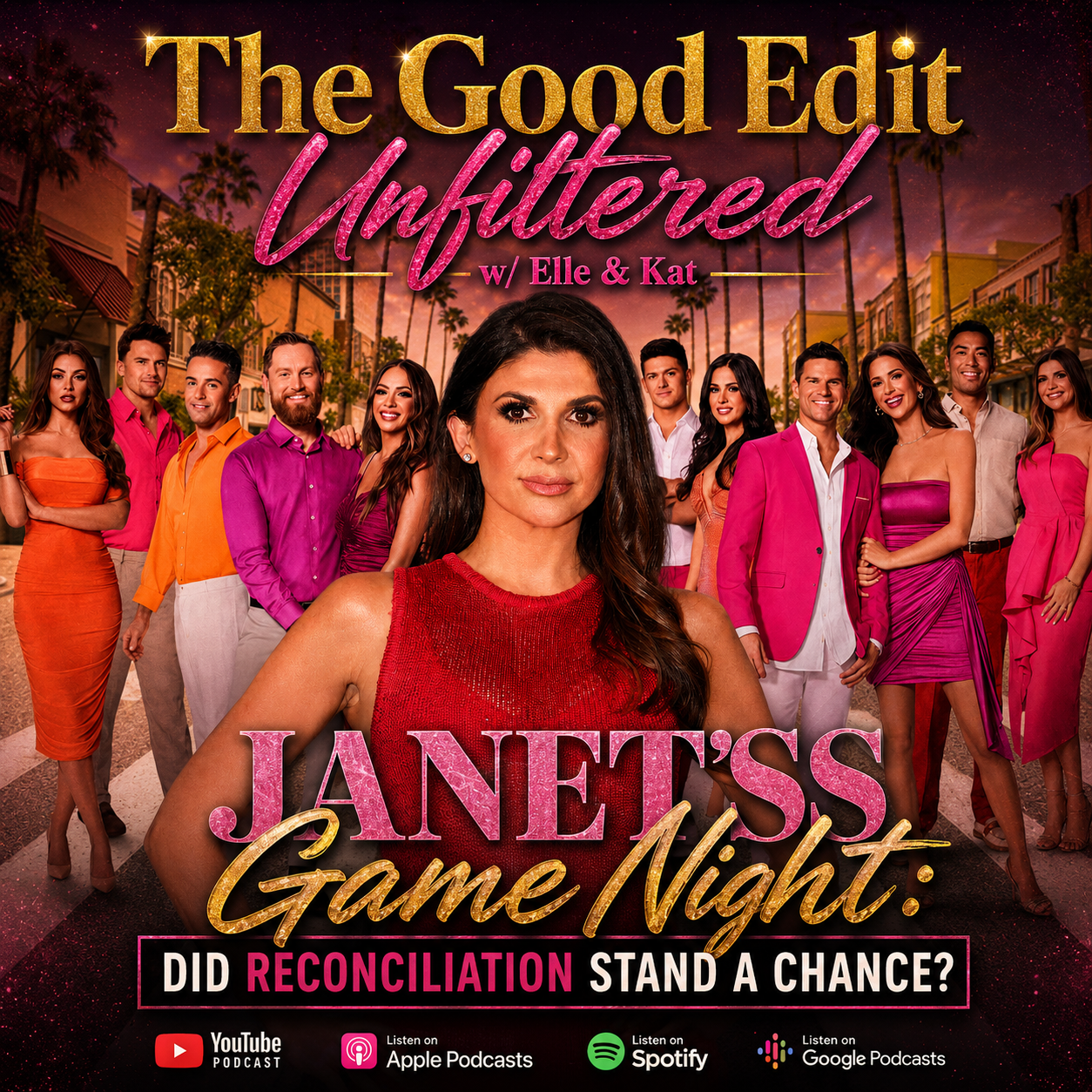
Janet Nia Failed Reconciliation | Welcome back to the blog, where we dissect the dramatic intricacies of reality television, extending the conversations sparked in our latest podcast episode. This week, we're diving deep into a pivotal moment from "The Valley" that had us all on the edge of our seats: Janet's ambitious attempt at reconciliation during a seemingly innocuous game night. Was it a genuine step towards healing, or a carefully orchestrated maneuver destined to falter? In our latest podcast episode, "Janets' Reconciliation Danny Nia | The Valley Recap Cast Conflict Character Analysis TV Editing {Part 2 of 2}", we unpack the layers of this event, and this blog post will further explore the dynamics at play, the individual reactions, and the lasting impact on the group's fragile relationships.
Janet's Game Night Gambit: Setting the Stage
The decision to host a game night as a backdrop for reconciliation was, in itself, a bold move. Game nights, in theory, are supposed to be about lighthearted competition, laughter, and fostering camaraderie. It's a neutral ground, a space where the pressures of dramatic confrontations can be temporarily suspended. Janet, by choosing this setting, was signaling a desire for a more relaxed, perhaps even more authentic, interaction. She wasn't calling a formal sit-down or demanding a one-on-one intervention; she was inviting people into her space for an activity that, at its best, builds bonds. However, as we know with reality television, "theory" and "practice" often diverge wildly. The success of such a gambit hinges entirely on the willingness of all parties involved to engage in good faith. The very fabric of "The Valley" is woven with pre-existing tensions and shifting alliances, making a peaceful game night a precarious proposition. The underlying question for viewers was whether Janet was aiming to genuinely mend fences or if this was a calculated attempt to regain favor or control the narrative. The atmosphere, even before any direct confrontation, was thick with the unspoken history and unresolved issues that plague this cast.
The Reconciliation Attempt: A Moment-by-Moment Breakdown
When Janet initiated her plea for peace, the air in the room shifted palpably. Her words, however carefully chosen, were met with a spectrum of responses. We saw Janet lay bare her desire for a fresh start, expressing her hurt but also her willingness to move past it. This vulnerability was key. She wasn't accusatory; she was seeking understanding. However, the immediate aftermath of her opening salvo revealed the fissures within the group. Some cast members offered tentative nods, a flicker of acknowledgment that perhaps this was the right direction. Others, however, remained stoic, their expressions betraying a deep-seated resistance. The crucial moments weren't just the spoken words but the silences, the averted gazes, the subtle shifts in body language. We observed who leaned in, who physically retreated, and who exchanged significant glances with others. It was in these micro-interactions that the true readiness, or lack thereof, for reconciliation became apparent. For some, Janet's words seemed to land as a genuine invitation. For others, they were perceived as an attempt to manipulate or to gloss over past transgressions. The "game" aspect of the night quickly became secondary to the emotional stakes being played out. Every interaction, every game move, every comment became amplified by the underlying tension.
Analyzing the Reactions: Who Was Ready for Peace?
This is where the true dissection begins. Not everyone's reaction to Janet's overture was the same, and understanding these individual responses is critical to assessing the success of her attempt. There were those who seemed genuinely receptive, their body language open, their verbal responses measured and considerate. These individuals, when they exist, often represent the potential for genuine healing. They might acknowledge Janet's feelings, perhaps offer a reciprocal apology or a willingness to listen. Their presence suggests a desire to move forward, even if the path isn't entirely clear. Then, there were the decidedly less receptive. These individuals might have remained silent, their faces impassive, or they might have offered dismissive remarks or passive-aggressive comments. Their actions speak volumes, indicating that they are either not ready to forgive, unwilling to acknowledge their role in the conflict, or perhaps still harbor resentment that outweighs any desire for peace. In some cases, their resistance might be rooted in a perceived lack of genuine remorse from Janet herself, or in a loyalty to other members of the cast who are still at odds with her. Crucially, there were also those whose reactions were ambiguous. They might have offered superficial agreement or polite platitudes, but their underlying demeanor suggested a lack of true commitment to the reconciliation process. These are the individuals who can be particularly frustrating to watch because they create the illusion of progress without any real substance. Their responses might be influenced by the group dynamic, a fear of alienating certain factions, or a strategic decision to play both sides. In our podcast, we delved into which cast members fell into each of these categories, examining their past behavior and their known allegiances to predict their likely responses and to understand why they reacted the way they did.
The 'Hive Mentality': How Group Dynamics Sabotaged Healing
One of the most significant factors undermining Janet's reconciliation attempt was the pervasive "hive mentality" within the group. This term, which we discussed at length in the episode, refers to the tendency of certain individuals to conform to the prevailing opinions and sentiments of the group, often to the detriment of individual judgment or authentic expression. In the context of "The Valley," this hive mentality can manifest as a powerful force, shaping perceptions and dictating responses. When one or two influential members of the group hold a particular stance, others may feel pressured to align with it, even if their own feelings are more nuanced. During Janet's game night, this hive mentality likely exacerbated the divisions. If certain individuals were predisposed to skepticism or animosity towards Janet, their negative energy could have rippled through the group, influencing others to adopt a similar stance. Conversely, if there were those who genuinely wanted to offer Janet a chance, they might have been hesitant to express their support for fear of ostracization or backlash from the dominant factions. The group's pre-existing alliances and rivalries were amplified, creating an environment where individual reconciliation was difficult, if not impossible, to achieve. Instead of seeing each interaction as an independent exchange, the responses were filtered through the lens of group loyalty and perceived social hierarchies. This collective reinforcement of negativity or skepticism acted as a powerful deterrent to any genuine attempt at bridging divides.
Janet's Vulnerability: Rewarded or Undermined by the Edit?
Janet's decision to be vulnerable on camera is always a double-edged sword. On one hand, it's what fans crave – authenticity, raw emotion, and a glimpse behind the curated facades. Her willingness to express her feelings, to admit hurt, and to extend an olive branch is, in theory, the bedrock of genuine reconciliation. This vulnerability can be incredibly compelling television, allowing viewers to connect with her on a human level. However, the reality of reality television editing is that vulnerability can also be weaponized. The way her actions and words are framed, juxtaposed with other scenes, and accompanied by confessional soundbites can drastically alter the audience's perception. Was her vulnerability presented as a sign of strength and a genuine desire for change? Or was it edited to appear manipulative, self-serving, or even desperate? The "hive mentality" of the cast can also be amplified by the edit, with certain members' critical confessionals potentially overshadowing any positive interactions. In our podcast, we debated whether the producers ultimately rewarded Janet's vulnerability with a sympathetic portrayal or undermined it to serve a more dramatic narrative. Did the edit highlight the moments where she was met with resistance to fuel conflict? Or did it showcase moments of genuine connection that might have been overlooked in the heat of the moment? The art of the edit plays a crucial role in shaping our understanding of these complex interpersonal dynamics, and it's often difficult to discern where reality ends and the constructed narrative begins.
Beyond the Game Night: Lingering Tensions and Future Moves
Even if some positive seeds were planted during the game night, the reality is that lingering tensions rarely disappear overnight, especially in the volatile world of reality television. The game night was merely a snapshot, a single episode in an ongoing saga. The underlying issues that led to the conflict likely remain, festering beneath the surface. The reactions witnessed during the game night are indicative of deeper-seated issues that will continue to play out in subsequent episodes. The question then becomes: what are Janet's next moves? Did this attempt at reconciliation provide her with clarity on who her allies are and who remains a detractor? Will she try a different approach, perhaps more direct confrontations or strategic alliances? Or will she, understandably, retreat and re-evaluate her strategy within the group? The effectiveness of her game night gambit will ultimately be judged by how it impacts her relationships moving forward. Will we see any genuine shifts in the group's dynamic, or will the same patterns of conflict and alliance persist? The "hive mentality" is a powerful force, and breaking free from its grip requires sustained effort and potentially a shift in the power dynamics within the cast.
Jesse's Divorce Arc: Navigating Real-Life Drama on Camera
While Janet's reconciliation attempt was a central focus, it's impossible to discuss this episode without acknowledging Jesse's deeply personal divorce arc. Reality television often blurs the lines between personal lives and public performance, and Jesse's story is a poignant example of this. Navigating a real-life divorce is incredibly challenging, and doing so under the constant scrutiny of cameras adds an immense layer of pressure. In our podcast, we discussed how effectively the show handled this sensitive storyline. Did they strike the right balance between capturing the emotional weight of Jesse's experience and serving the entertainment value of the program? We examined how the cast rallied around Jesse – or failed to do so – and what this revealed about their individual characters and the group's overall support system. It's a delicate tightrope walk for both the individuals involved and the production team. On one hand, authentic portrayal of grief and struggle can be incredibly powerful. On the other, there's a risk of exploiting personal pain for ratings. We analyzed the moments where Jesse's vulnerability seemed genuine and how the show's editing either amplified or diminished its impact. This arc offers a compelling case study in how real-life drama is integrated into the manufactured narrative of a reality show.
The Art of the Edit: Crafting the Narrative of Reconciliation
Ultimately, every moment we see on screen is a carefully curated product of the editing process. This is what we explore extensively on "The Good Edit." The narrative of reconciliation, whether successful or not, is constructed through scene selection, confessional placements, music choices, and the overall pacing of the episode. The editors have the power to shape our perception of Janet's intentions, the sincerity of her castmates' reactions, and the overall outcome of her game night gambit. Did the edit emphasize moments of hope and connection, suggesting that reconciliation might still be possible? Or did it focus on the discord and the resistance, framing the entire endeavor as a failed attempt and a catalyst for further conflict? The "hive mentality" itself can be amplified or subdued by the edit, with certain voices given more prominence than others. The narrative of Jesse's divorce also undergoes this same editorial shaping. What we see is not necessarily the unfiltered reality, but a story meticulously crafted to elicit specific emotional responses from the audience. Understanding the art of the edit is crucial to becoming a discerning viewer, allowing us to look beyond the surface drama and appreciate the complex layers of production that go into creating the shows we love. In conclusion, Janet's game night was a fascinating, albeit fraught, attempt at reconciliation. As we explored in both this blog post and our latest podcast episode, "Janets' Reconciliation Danny Nia | The Valley Recap Cast Conflict Character Analysis TV Editing {Part 2 of 2}", the success of such an endeavor is rarely a simple yes or no. It's a complex interplay of individual willingness, group dynamics, and the powerful influence of the edit. While Janet extended the olive branch, the reception was far from uniform, revealing the deep-seated tensions and the undeniable "hive mentality" that continues to shape the relationships within "The Valley." We'll be watching closely to see how these unresolved issues continue to unfold.

Creator | Host | Co-Executive Producer
Elle Schwartz is a behavioral analyst, writer, and the creator, host, and executive producer of The Good Edit Unfiltered, an award winning podcast that brings context to reality television. Born in Compton, California, she holds five degrees from private institutions, including the University of Southern California, and draws on her background in behavioral science to examine how production edits shape the stories audiences see on screen.
Launched in February 2026, The Good Edit Unfiltered covers The Real Housewives franchises, Vanderpump Rules, Summer House, The Valley, and Married at First Sight.
The show is produced under Layered Media Inc. and Rude Mood Media, with Schwartz serving as executive producer alongside Ric Swartzlander. Its signature series, the Reality TV Cultural Reckoning, and its Grammar of Conflict framework explore how race, culture, and casting influence the way reality stars are portrayed.
In its first year, the podcast won three 2026 Black Podcasting Awards (Best Producer, Best Daily Podcast, and Original Music) and multiple 2026 Davey Awards, including Gold for the Reality TV Cultural Reckoning series. It ranks number 1 all time in Indie Real Housewives on Goodpods.
Schwartz is a member of the Television Critics Association and a founding member and judge of the Open Podcast Awards. She is also a credited co writer on Kyla & the White Guy, a scripted comedy series optioned by Roku. She lives in Encino, California.
Short bio (for spots with tight character limits)
Elle Schwartz is a behavioral analyst, writer… Read More