Unpacking the Porsha and K. Michelle "Friend Contract" on RHOA: A Behavioral Analysis
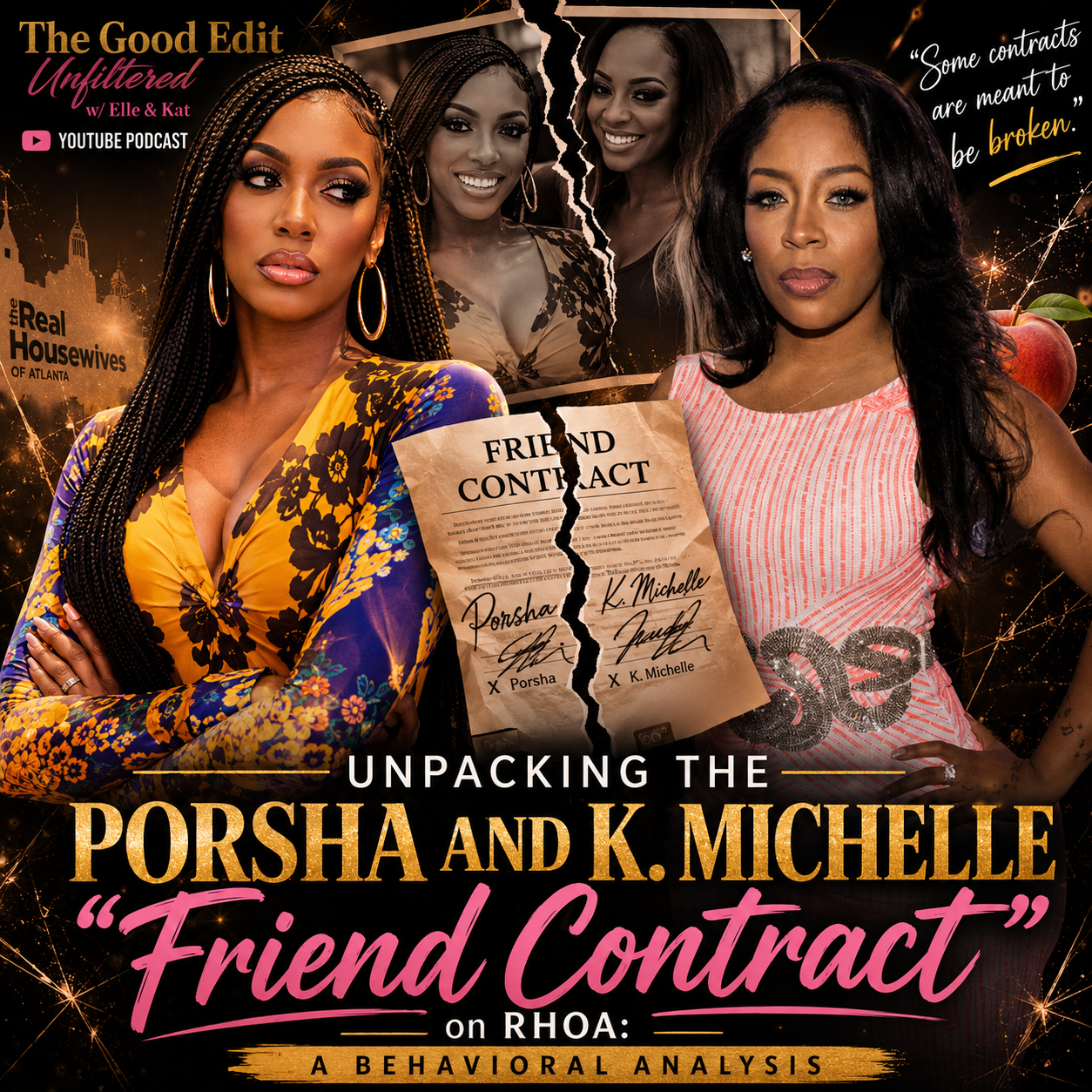
Porsha KMichelle Friend Contract | Dive into the intricate psychology behind the Real Housewives of Atlanta's Porsha and K. Michelle's "friend contract." This post breaks down the behavioral patterns, production's staging of resolutions, and how these manufactured agreements mirror broader franchise dynamics, offering insights beyond a simple recap.
Key Takeaways
- The "friend contract" between Porsha and K. Michelle is analyzed as a manufactured resolution, potentially set up by production for future drama.
- Host Elle Schwartz applies behavioral analysis to understand the underlying patterns of reconciliation and conflict reactivation in such agreements.
- The franchise's tendency to recycle narrative devices, like friend contracts, is highlighted through Cynthia Bailey's callback to her own past agreement.
- Production's deliberate editing choices are crucial in framing these agreements, assigning roles, and building long-term storylines.
- These constructed alliances reveal deeper insights into cast dynamics and the strategic manipulation inherent in reality television.
The Manufactured Peace Treaty: Beyond the Handshake
The Real Housewives franchise is known for its dramatic conflicts, but just as compelling is how those conflicts are resolved – or, more accurately, how resolutions are *staged*. In a recent episode of *The Good Edit Unfiltered*, hosts Elle Schwartz and Kat Vasseghi delved into the Real Housewives of Atlanta (RHOA) Season 17 Episode 9, specifically dissecting the much-discussed "friend contract" between Porsha and K. Michelle. This wasn't just about a superficial agreement to be friends; it was a deep dive into the behavioral underpinnings and production's masterful orchestration of narrative.
Behavioral analyst Elle Schwartz approached the situation with a keen eye, identifying that such "contracts" are often less about genuine reconciliation and more about a narrative device. The act of formalizing a friendship agreement, especially after significant conflict, can serve multiple purposes within the context of reality television. For the audience, it might appear as a step towards healing and moving forward. However, from a production standpoint, it's a meticulously crafted moment designed to serve the overarching storyline.
Schwartz's analysis pointed out the behavioral patterns at play. When individuals in conflict feel pressured to reconcile, especially under the watchful eye of cameras and with the mediation of other cast members (like Cynthia and Pinky in this instance), the resulting agreement can be fragile. It's an attempt to create a sense of closure and control in a chaotic environment. Yet, the underlying issues that led to the conflict often remain dormant, waiting for the right moment – or the right edit – to resurface.
Production as the Invisible Hand: Crafting the Narrative
The power of production in shaping reality TV narratives cannot be overstated. The Porsha and K. Michelle "friend contract" is a prime example of how editing and strategic framing can build and dismantle relationships on screen. The hosts discussed how production doesn't just capture events; it actively constructs them. This means carefully selecting which moments are highlighted, which reactions are emphasized, and how an entire arc of conflict and resolution is presented to the viewers.
Schwartz and Vasseghi explored how the edit might stage a resolution with the explicit intention of unraveling it later. This is a common strategy in reality television to maintain long-term engagement. A peace treaty, however sincere it might seem at the moment it's signed, can become a source of future conflict if one party feels the terms were violated or if production needs to reintroduce drama. The "friend contract" becomes a ticking time bomb, a narrative beat that production can revisit and exploit as the season progresses.
Furthermore, the context surrounding the agreement is crucial. The accusations traded, the history between the individuals, and the overall dynamics of the cast all play into how this contract is perceived and, more importantly, how it's used by producers. By foregrounding certain elements and downplaying others, production guides the audience's understanding of the relationship's trajectory. This isn't random; it's a deliberate machine working to create compelling television.
The Recycling of Franchise Mythology
One of the most fascinating aspects of the discussion was the way Cynthia Bailey's callback to her own past "friend contract" highlighted a recurring theme within the Real Housewives franchise: the recycling of its own mythology. Franchises often lean on established narrative tropes and historical moments to build continuity and resonate with long-term viewers. A "friend contract" is a recognizable story beat that fans have seen play out in various iterations across different cities.
When Cynthia references her own history with such agreements, it serves as a meta-commentary on the nature of reality TV. It suggests that these moments, while seemingly unique to the current cast, are part of a larger, ongoing narrative tapestry woven by the production teams. This recycling can create a sense of familiarity and anticipation, as viewers might expect similar outcomes or conflicts to arise.
For the RHOA cast, participating in or witnessing these recurring narrative devices can also have psychological implications. It can blur the lines between genuine personal development and performance for the cameras. The "friend contract" becomes more than just an agreement between two women; it's a nod to the established conventions of the genre, a performance within a performance.
Behavioral Patterns Beneath the Surface
Elle Schwartz's expertise in behavioral analysis provided a critical lens through which to examine the Porsha and K. Michelle interaction. Beyond the cameras and the contracts, there are fundamental human behaviors at play. Reconciliation after conflict often involves:
- The desire for social harmony: Cast members, especially those in close proximity, may feel an inherent need to restore balance within the group dynamic.
- Strategic alliances: Sometimes, agreements are formed not out of genuine affection, but out of a strategic need to present a united front or to gain favor with certain factions within the cast or with production.
- Conflict avoidance vs. resolution: A "friend contract" can be an attempt to avoid further immediate confrontation, but it doesn't necessarily mean the root causes of the conflict have been addressed.
- The reactivation of past traumas or conflicts: As Schwartz noted, the history each conflict reactivates is significant. Past grievances can easily resurface, derailing even the most well-intentioned agreements.
The Porsha and K. Michelle situation, as analyzed by the podcast hosts, exemplifies how these behavioral patterns intersect with the demands of reality television. The "friend contract" is the visible manifestation of these underlying dynamics, strategically presented for maximum dramatic impact. It's a testament to the complex interplay between authentic human emotion and the calculated construction of a television narrative.
The Lingering Conspiracy Thread: Saving the Slow Burn
The episode analysis also touched upon K. Michelle's "simmering conspiracy thread," a narrative element that production is clearly keeping alive in the margins. This "slow burn" is a classic production tactic, designed to build anticipation and provide future storylines. The "friend contract" could be seen as part of this larger strategy, either as a way to temporarily quell one potential conflict while another simmers, or as a future pivot point when the conspiracy thread needs a companion storyline.
By keeping these elements in the background, production ensures that there are always threads to pull on. The audience might not be fully aware of the conspiracy, but its presence is felt, adding a layer of intrigue. The "friend contract," in this context, isn't just about Porsha and K. Michelle; it's a narrative tool that can be manipulated to serve the broader, long-term story production is crafting.
This approach highlights the hosts' emphasis on treating production as a "deliberate machine." It's not just about what happens on screen, but *why* it happens and how it's presented. The Porsha and K. Michelle "friend contract" is a fascinating case study in the strategic construction of relationships and the nuanced art of reality television storytelling. It’s a reminder that what we see is rarely the full story, but rather a carefully edited version designed to keep us hooked.
For a complete breakdown of the Porsha and K. Michelle "friend contract" and other RHOA Season 17 Episode 9 insights, Listen to the full episode. Elle and Kat provide a level of analysis that goes far beyond typical recap culture, offering a deeper understanding of the psychology and production strategies at play.
Frequently Asked Questions
What makes the Porsha and K. Michelle "friend contract" different from a real-life agreement?
In reality TV, a "friend contract" is often a narrative device orchestrated by production. While it might involve genuine emotions and behavioral patterns from the cast, its primary function is to serve the storyline, create potential for future conflict, and provide a visual representation of reconciliation that can later be manipulated. It's less about authentic negotiation and more about staged resolution.
How does production use "friend contracts" to build long-term storylines?
Production can use "friend contracts" as a temporary pause in conflict, allowing them to focus on other storylines. Later, they can revisit the contract to show it being broken, reintroduce old grievances, or use it as a point of leverage. It acts as a narrative device that can be easily reactivated when the plot requires it, ensuring ongoing drama and character development.
Why is Cynthia Bailey's callback to her own "friend contract" significant?
Cynthia's reference highlights the franchise's tendency to reuse successful narrative tropes. It shows how "friend contracts" have become a recognizable element within the Real Housewives universe. This recycling of mythology can create a sense of continuity for viewers and signals to the cast that such agreements are part of the expected dramatic arc of the shows.
Can a "friend contract" in reality TV ever lead to genuine, lasting reconciliation?
While genuine reconciliation is possible between individuals, the context of reality TV often complicates this. The pressure to perform for cameras, the potential for production to reignite conflicts, and the underlying issues that may not be fully addressed mean that many "friend contracts" within the franchise are inherently fragile. They are often more about narrative function than authentic, enduring peace.
What behavioral patterns does Elle Schwartz look for when analyzing these "friend contracts"?
Elle Schwartz, as a behavioral analyst, looks for patterns such as the desire for social harmony, strategic alliance formation, the tension between conflict avoidance and true resolution, and how past conflicts or traumas are reactivated. She analyzes these to understand the underlying motivations and potential future implications of the agreement beyond its on-screen presentation.
Creator | Host | Co-Executive Producer
Elle Schwartz is a behavioral analyst, writer, and the creator, host, and executive producer of The Good Edit Unfiltered, an award winning podcast that brings context to reality television. Born in Compton, California, she holds five degrees from private institutions, including the University of Southern California, and draws on her background in behavioral science to examine how production edits shape the stories audiences see on screen.
Launched in February 2026, The Good Edit Unfiltered covers The Real Housewives franchises, Vanderpump Rules, Summer House, The Valley, and Married at First Sight.
The show is produced under Layered Media Inc. and Rude Mood Media, with Schwartz serving as executive producer alongside Ric Swartzlander. Its signature series, the Reality TV Cultural Reckoning, and its Grammar of Conflict framework explore how race, culture, and casting influence the way reality stars are portrayed.
In its first year, the podcast won three 2026 Black Podcasting Awards (Best Producer, Best Daily Podcast, and Original Music) and multiple 2026 Davey Awards, including Gold for the Reality TV Cultural Reckoning series. It ranks number 1 all time in Indie Real Housewives on Goodpods.
Schwartz is a member of the Television Critics Association and a founding member and judge of the Open Podcast Awards. She is also a credited co writer on Kyla & the White Guy, a scripted comedy series optioned by Roku. She lives in Encino, California.
Short bio (for spots with tight character limits)
Elle Schwartz is a behavioral analyst, writer… Read More