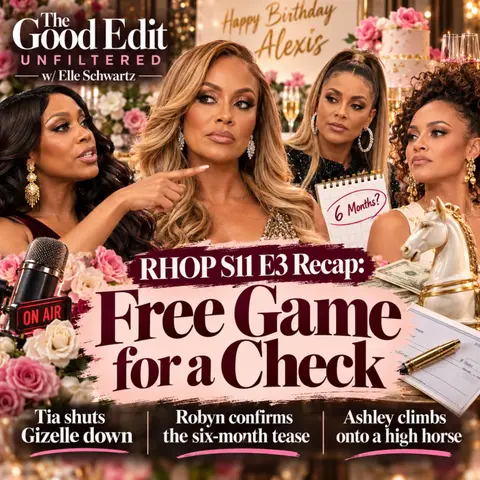
When Reality TV Friends Monetize Personal Secrets: The Ethics of Podcast Teasing on RHOP
Reality television casts rely heavily on pre-existing friendships and alliances, but what happens when those personal bonds are weaponized for financial gain? On the Real Housewives of Potomac, the line between private loyalty and public monetization has blurred completely. When cast members use their own recap podcasts or external platforms to hint at, tease, or outright drop bombshell revelations about their co-stars months before they air on television, it fundamentally alters the dynamic of the show. This calculated rollout of information turns personal history into a commodity, transforming cast relationships into transactional content engines where family privacy becomes free game for a check.
Key Takeaways
- Podcast monetization has changed how reality TV cast members leak, tease, and strategize personal storylines.
- Dropping hints about a co-star's marital or family issues months in advance shifts the narrative control away from the show itself.
- The expectation of blind loyalty breaks down when financial incentives encourage cast members to capitalize on each other's private lives.
- Behavioral analysis reveals that off-screen media platforms allow housewives to test audience reactions before major on-screen confrontations.
- Accountability on camera often rings hollow when the underlying friction stems from pre-planned media rollouts.
The Economics of Off-Screen Teasing
In the modern era of reality television, a housewife's job description no longer ends when the cameras stop rolling. With the explosion of companion podcasts, Patreon tiers, and digital brand building, cast members are incentivized to keep engagement high 365 days a year. However, this perpetual content cycle creates a dangerous conflict of interest. When a reality star hosts a weekly podcast, they need topics that drive downloads, ad revenue, and social media traction. Naturally, the most lucrative currency in their world is insider gossip about their own show.
This monetization model creates a perverse incentive structure. If a cast member possesses private knowledge about a co-star's dating life, marital struggles, or legal drama, sharing that information on their own platform generates immediate financial returns. The television show becomes merely the promotional vehicle for the off-screen commentary. Consequently, viewers are no longer watching organic interpersonal conflict unfold on screen; they are watching the fallout of a pre-monetized digital strategy where private boundaries are crossed for algorithmic engagement.
The Cost of Compromised Friendships
True friendship requires a baseline of trust, particularly when it comes to protecting a friend's vulnerable narrative. On the Real Housewives of Potomac, that trust is routinely sacrificed at the altar of content creation. When personal information is weaponized months ahead of an episode's air date—such as hinting at a new romance or dredging up past vulnerabilities on an external podcast—it strips the individual of their right to share their own story on their own terms.
This dynamic was brought into sharp focus during recent cast confrontations regarding podcast drops and pre-emptive leaks. When accountability coaches and long-time cast members step in to referee these disputes, they often highlight a fundamental hypocrisy: the demand for loyalty on camera combined with the complete abandonment of loyalty off camera. If a friend's family life, marriage, or dating history is treated as free game to boost download numbers, the entire ecosystem of the show becomes toxic and transactional.
Behavioral Analysis of On-Camera Trials
When reality TV confrontations morph into courtroom-style trials—complete with witness testimony, cross-examinations, and dramatic evidence reveals—it provides a fascinating case study in behavioral defense mechanisms. From a psychological perspective, staging a massive group confrontation at a birthday party or social gathering is a classic displacement tactic. Cast members project their off-screen grievances into on-screen spectacles to control the narrative edit.
When confronted about dropping hints on a podcast six months prior, the typical defense involves semantic gymnastics: claiming it was merely a 'hint,' a general observation, or completely unrelated to the current on-screen drama. However, behavioral analysis shows that anticipatory leaking is a calculated move designed to preemptively shape public perception. By planting the seed online long before the episode airs, the leaker primes the audience to accept a specific narrative, leaving the victim scrambling to defend themselves against a well-established public bias.
Conclusion and Final Thoughts
The intersection of reality television and podcasting has permanently transformed how stories are told, contested, and monetized. While fans love a deep dive into the behind-the-scenes mechanics of their favorite shows, the human cost of turning personal friendships into podcast fodder cannot be ignored. Loyalty cannot coexist with a business model that profits from a friend's private pain. To explore more behavioral breakdowns and scene-by-scene analysis of how the edit shapes our perception of these conflicts, Listen to the full episode. Join the community of Edittors and never look at reality television the same way again.
Frequently Asked Questions
How do reality TV podcasts impact on-screen friendships?
Reality TV companion podcasts often strain cast relationships because they create financial incentives for cast members to discuss, tease, or leak private off-screen drama for downloads and ad revenue before it airs on television.
What does it mean when a reality star drops hints on a podcast months in advance?
Dropping hints months prior is a strategic move to preemptively shape public perception, prime the audience, and build anticipation for an upcoming storyline, effectively stealing narrative control from the person experiencing it.
Why do reality TV cast confrontations often feel like courtroom trials?
Cast members frequently stage large-scale confrontations as theatrical performances to establish guilt, demand public accountability, and control the narrative edit in front of their peers and the audience.
Can loyalty truly exist among cast members who run competing recap podcasts?
True loyalty is severely challenged when financial survival and brand growth depend on creating compelling content, which often requires breaking personal confidences and monetizing private drama.