Beyond the Recap: The Psychological Dynamics of RHOBH Cast Interactions
Beyond the Recap: The Psychological Dynamics of RHOBH Cast Interactions
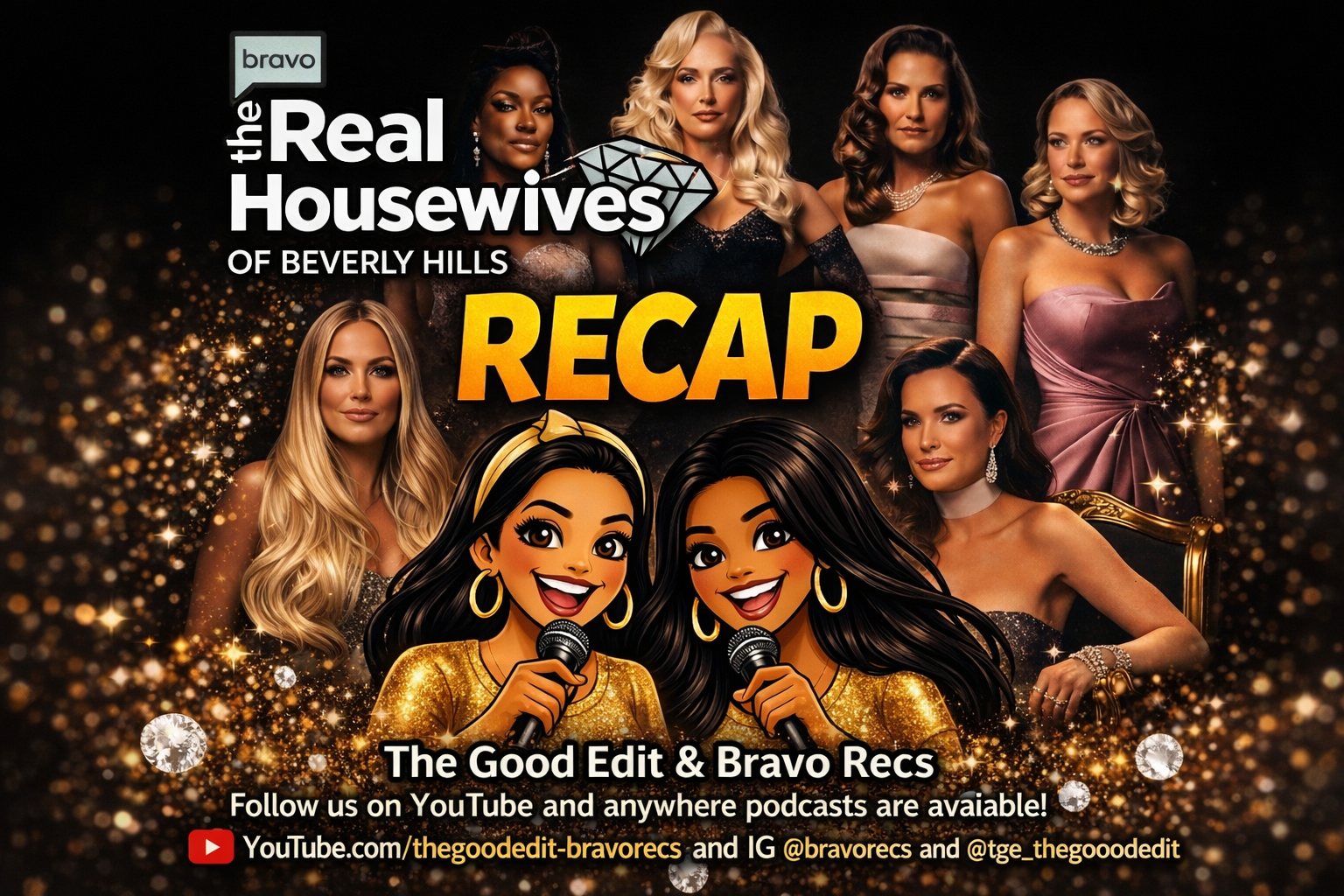
Recaps Unfiltered TV Analysis Welcome back, Edittors! In our latest episode, "The Real Housewives Of Beverly Hills Drama On The Dance Floor," we dissected the immediate fallout from the cast's trip to Italy, focusing on the shifting alliances and simmering tensions that came to a head at Rachel's disco-themed birthday party. While the recap provided a thrilling blow-by-blow of the events, in this blog post, we're going to peel back the layers and delve into the psychological underpinnings that truly drive the intricate web of relationships within the Real Housewives of Beverly Hills. These women aren't just characters in a drama; they are complex individuals whose interactions are shaped by a fascinating array of psychological phenomena. We'll explore how their friendships, rivalries, and evolving bonds are not just about who said what to whom, but about deeper needs, insecurities, and unconscious motivations.
The Post-Italy Fallout: Shifting Alliances and Emotional Distancing
The Italy trip, as often happens on these shows, served as a crucible. The confined space, heightened emotions, and shared experiences can either forge stronger bonds or expose cracks that were already present. In the aftermath, we saw a clear bifurcation of the cast. Kyle and Erika seemed to find common ground, or at least a comfortable distance from Dorit. This isn't merely a case of personal preference; it speaks to the complex social calculus at play. When friendships are tested, people gravitate towards those who offer a sense of safety, understanding, or even just a shared narrative. The "post-Italy fallout" we observed is a prime example of how past experiences, even seemingly minor ones, can recalibrate existing relationships. Emotional distancing is a defense mechanism, a way to protect oneself from further conflict or disappointment. Kyle and Erika’s perceived move away from Dorit suggests a need to manage the emotional fallout from the trip, perhaps by realigning themselves with individuals perceived as less volatile or more aligned with their current emotional state. It’s a subtle dance of support and self-preservation, often played out through glances, hushed conversations, and strategic seating arrangements.
Sutton's Olive Branch: The Futility of Peace in a House Divided
Sutton's attempt to extend an olive branch, to foster a sense of unity amidst the discord, is a poignant moment that highlights a common dynamic in group settings: the peacemaker's struggle against ingrained conflict. In a group as established and as fraught with history as the Beverly Hills cast, individual efforts to smooth over differences can often feel like trying to bail out a sinking ship with a teacup. The inherent divisions within the group, exacerbated by the Italy trip, meant that any gesture of peace, no matter how genuine, was likely to be met with suspicion or dismissed by those already entrenched in their positions. This isn't to say Sutton's intentions weren't pure; rather, it demonstrates the psychological inertia of established rivalries. When individuals have invested significant emotional energy into a conflict, it becomes difficult to disengage, even when presented with an opportunity for reconciliation. The group dynamic has developed its own momentum, and breaking that momentum requires more than just a well-intentioned gesture. It often necessitates a collective willingness to shift, which is rarely present when simmering resentments are at play.
Bozoma's Surprise: Moments of Genuine Connection Amidst the Chaos
Amidst the interpersonal drama, Bozoma's surprise provided a much-needed moment of genuine human connection. Reality television, for all its manufactured drama, can also capture authentic emotions and unexpected bonds. These moments are crucial because they remind us that beneath the curated personas and scripted conflicts, these are real people experiencing real feelings. Bozoma's surprise, whatever its nature, likely served as a powerful reminder of what truly matters – friendship, support, and shared joy. In the often-toxic environment of a reality show cast, genuine connection can act as an anchor, grounding individuals amidst the storm of manufactured conflict. It also serves to illustrate that even within a group rife with tension, there are opportunities for positive interactions. These flashes of authenticity are what keep viewers invested, as they offer glimpses of the human element that transcends the drama.
Dorit's Debut: Navigating Vulnerability and the Shadow of Absence
Dorit's book cover reveal, intended as a celebration, was instead overshadowed by the palpable absence of certain cast members and the underlying tensions. This situation offers a profound insight into the complexities of navigating personal milestones within a group dynamic that is anything but harmonious. Dorit's attempt to share a moment of personal triumph was met not with unadulterated joy from all, but with a backdrop of discord and calculated distance from others. This forces Dorit, and by extension the audience, to confront the reality that personal achievements can be complicated by existing relationships. The "shadow of absence" highlights how unspoken grievances and unresolved conflicts can cast a long pall over even the most joyous occasions. It speaks to the emotional labor involved in maintaining relationships, especially in a high-stakes environment where perceived slights and allegiances can overshadow genuine support. Dorit's vulnerability in sharing this personal moment, only to have it tinged with interpersonal drama, underscores the challenges of finding genuine connection when the group is fractured.
Psychological Dynamics at Play: From Triangulation to Projection
Beyond the specific events, the interactions on RHOBH are a masterclass in applied social psychology. We see these dynamics play out constantly:
Triangulation
Triangulation is a common tactic in interpersonal relationships, especially within groups where conflict is prevalent. It involves a third party being brought into a dyadic relationship to stabilize it or to manipulate the relationship. We see this frequently on RHOBH, where a disagreement between two individuals might be amplified or exacerbated by the involvement of a third, who may take sides, relay messages, or offer opinions that further entrench the conflict. This can be a deliberate strategy to gain an advantage, or it can be an unconscious behavior stemming from a need for validation or a desire to control the narrative. For instance, if Person A is upset with Person B, Person A might confide in Person C, who then relays this information to Person B, often with their own interpretation, thus creating a triangle of communication and potential conflict. This is not about resolving issues; it's about managing the perception of issues and often about creating alliances.
Projection
Projection is another powerful defense mechanism observed on the show. It's when an individual unconsciously attributes their own unacceptable feelings, thoughts, or impulses to another person. For example, if a cast member is struggling with feelings of insecurity about their own behavior or choices, they might lash out at another cast member, accusing them of the very things they fear within themselves. This allows them to avoid confronting their own shortcomings by externalizing them onto someone else. It's a way of maintaining a positive self-image by blaming others for negative traits or behaviors. This can manifest as overly harsh criticism of another’s actions, intense defensiveness when their own actions are questioned, or an uncanny ability to find fault in others that mirrors their own hidden anxieties.
Gaslighting
While not always overt, subtle forms of gaslighting can also be present. Gaslighting is a form of psychological manipulation where a person seeks to sow seeds of doubt in a targeted individual or members of a group, making them question their own memory, perception, or sanity. On RHOBH, this might not be as extreme as outright denial of events, but rather a consistent reframing of situations to make one cast member appear irrational, overly emotional, or memory-challenged, thereby shifting blame and control. When a cast member consistently twists narratives or downplays the experiences of another, it can be a form of gaslighting that erodes the target's confidence in their own reality.
Groupthink and Conformity
The pressure to conform within a group is also a significant factor. As alliances form, there can be an unspoken expectation that members will adhere to the group’s prevailing opinions and sentiments. This can lead to groupthink, where a desire for harmony or conformity in a group results in an irrational or dysfunctional decision-making outcome. In the context of the show, this might mean that individuals who might otherwise have a different perspective are pressured, subtly or overtly, to align with the majority opinion to avoid becoming an outcast. This is why we often see factions form, and individuals within those factions rarely deviate from the group's narrative, even when presented with evidence to the contrary.
Attachment Styles and Relationship Patterns
Furthermore, the long-standing relationships on the show often reflect ingrained attachment styles. Anxious-preoccupied individuals might constantly seek reassurance and become distressed by perceived slights. Avoidant-dismissive individuals might withdraw or shut down when faced with emotional intensity. Secure individuals, though rarer in this high-drama environment, are able to navigate conflicts with more balance. These underlying patterns influence how each woman approaches conflict, expresses needs, and forms bonds, creating predictable yet complex relational dynamics that evolve over seasons.
The intricacies of these psychological dynamics are what make watching the Real Housewives of Beverly Hills so compelling. It's not just about the surface-level drama; it's about understanding the unspoken rules, the hidden motivations, and the complex interplay of human behavior under a magnifying glass. Each interaction, each alliance, each conflict is a testament to these powerful psychological forces at work.
Conclusion: The Enduring Allure of RHOBH's Interpersonal Chess
As we’ve delved deeper than the surface recap of our latest episode, it’s clear that the Real Housewives of Beverly Hills offers a fascinating case study in human psychology. The post-Italy fallout, Sutton's futile peace attempts, Bozoma's genuine connection, and Dorit's complex debut are all snapshots of larger, enduring psychological dynamics. These women are engaged in an intricate game of interpersonal chess, where every move, every alliance, and every conflict is laden with meaning. The show’s enduring allure lies not just in the extravagant lifestyles or the dramatic confrontations, but in our recognition of these fundamental human behaviors playing out on a grand, albeit often theatrical, stage. The psychological underpinnings we've explored – triangulation, projection, the pressure to conform, and the navigation of vulnerability – are what truly make RHOBH a compelling watch. It’s this ongoing, evolving interpersonal chess match that keeps us hooked, season after season, always wondering what the next move will be.

Creator | Host | Co-Executive Producer
Kat Vasseghi is a Bravo Commentator and the co-creator and co-host of The Good Edit w/ Elle & Kat, a culture-forward podcast where reality TV meets psychology, sociology, and sharp analysis. Previously known for her brand BravoRecs, Kat brings years of fluency in the Bravo universe its personalities, storylines, and fandoms paired with quick wit and a fan's instinct for the moments that matter. As a Bravo Commentator, she turns each recap into something sharper and more revealing than the average reaction show.
Known for her humor and culturally fluent takes, Kat reads the Bravo universe through the lens of the fans who live in it, catching the shifts and subtext other recaps miss. Alongside co-host Elle Schwartz, she co-created The Good Edit w/ Elle & Kat, blending cultural fluency, sharp humor, and elevated Bravo commentary into one of the most refreshing new voices in the reality TV podcast space.