
 Apple Podcasts
 Spotify
 Deezer
 Amazon Music
 iHeartRadio
 YouTube
 Podcast Addict
 Castbox
 Castro
 Goodpods
 RSS Feed
 Before Nashville, There Was Congo Square | RHOC Emily Simpson Analysis
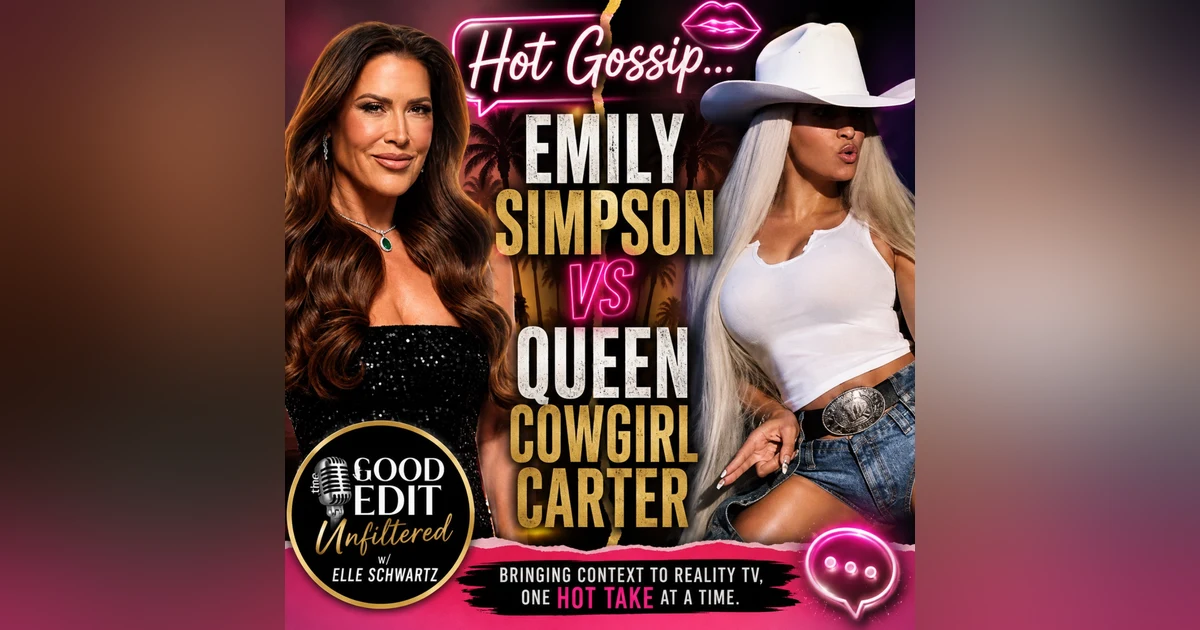
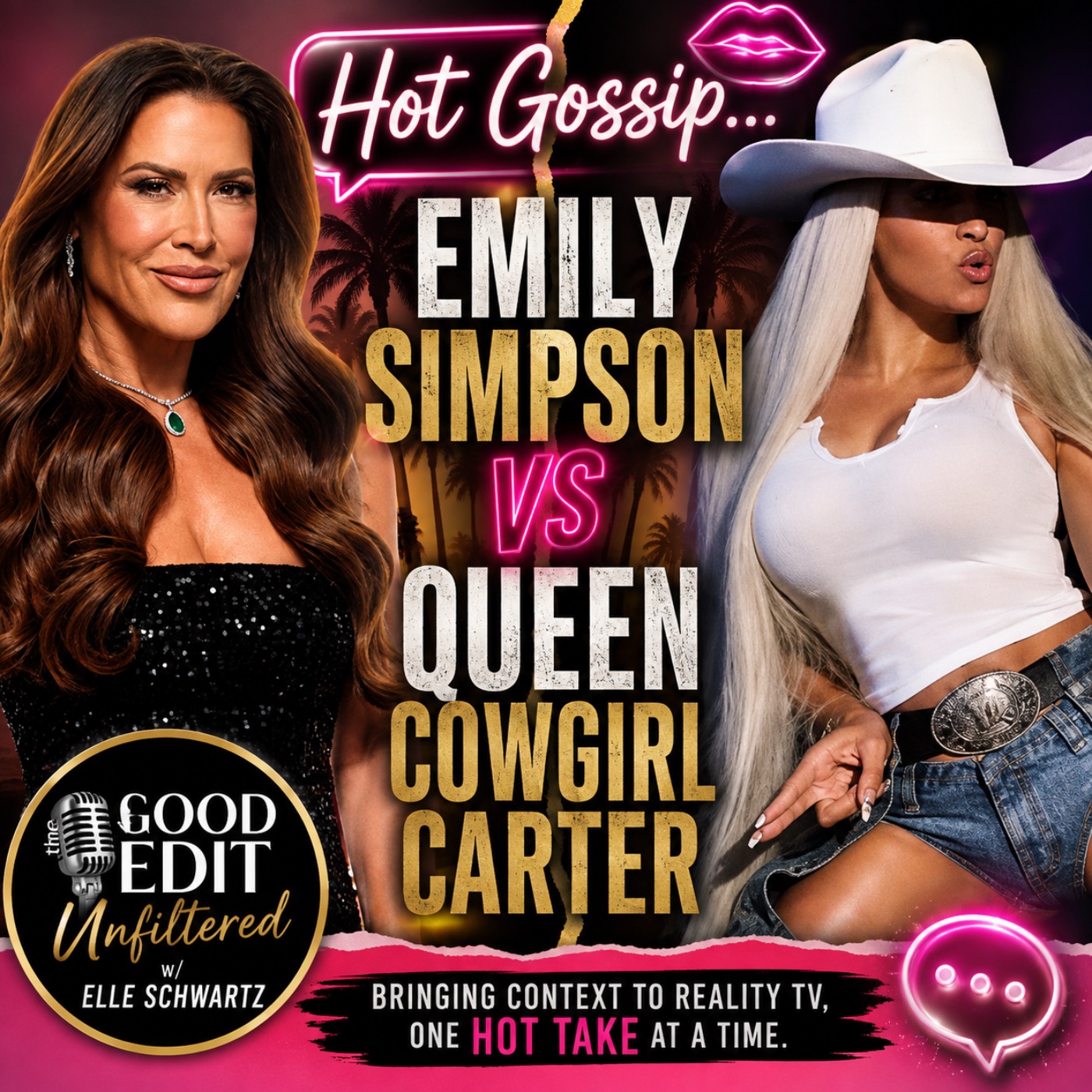
What a Bravo Comment About Beyoncé Gets Wrong About Where Country Music Actually Came From
Key Takeaways
- Behavioral analyst and host Elle Schwartz examines RHOC star Emily Simpson through a unique lens, connecting the production editing of unscripted television to broader cultural format gatekeeping.
- The episode bridges a reality TV recap with historical context, tracing the African roots of the banjo and country music back to Congo Square in New Orleans.
- Historical records, including Benjamin Latrobe's 1819 eyewitness accounts, prove that banjos and fiddles were played together in Black gatherings decades before the first recorded country records.
- Elle Schwartz and executive producer Ric Swartzlander draw parallels between how country radio gatekeeps musical genres and how reality TV editors predetermine a housewife's narrative before the tape rolls.
- By examining the intersection of cultural history and reality TV editing, the show challenges audiences to look past manipulated television edits and recognize the true context behind what they see on screen.
Before Nashville, There Was Congo Square | RHOC Emily Simpson Analysis | Somebody said the quiet part out loud about Beyoncé and country music, and this episode is what happens when you actually go look it up.
We open with what was recounted on Bravo's Most Wanted, attributed exactly as it was told, and then Elle and Ric react to it as producers before the tone shifts. Because the reaction is the easy part. The interesting part is that the premise underneath the comment is wrong, and there is a dated eyewitness account that proves it.
That account comes from a square in New Orleans. Under French and later Spanish colonial practice, enslaved people in the city had Sundays off, and by 1817 the city had designated Congo Square as the only legal place for Black people to gather. Historian Dena Epstein's conclusion is the line that matters here. This was the only place in America where the African musical tradition was able to continue in the open. Everywhere else it was suppressed or driven underground.
In February 1819, an architect named Benjamin Latrobe walked up on those Sunday gatherings and wrote the most detailed account we have. He sketched the instruments. One of them was a banza, a gourd bodied stringed instrument that came before the banjo, and he noted it had been brought from Africa and was being played by a man in his eighties or nineties. Fifteen years later, another observer listed banjos, violins, tom toms, jawbones and triangles in the same square. Banjos and fiddles together, in a Black gathering, decades before anybody recorded a country record.
Elle walks through why the city mattered structurally. New Orleans was the largest slave market in the antebellum South and it sat at the mouth of the Mississippi, which means whatever happened musically there traveled upriver into Tennessee, Kentucky and the Ohio Valley. Then come the receipts. The 1920s split of one shared Southern catalog into hillbilly records and race records. Jimmie Rodgers recording with Louis Armstrong in 1930. Aaron Neville charting country and winning a country Grammy.
Beyoncé topping the country chart and getting shut out of the CMA ballot.
And then the part this show always comes back to. Format gatekeeping in country radio and production editing in unscripted television are the same instrument pointed at different rooms. Both decide what a person is before the tape rolls, then select the material that proves it. Both call the result neutral. Both blame the audience.
Host Elle Schwartz is a behavioral analyst. The Good Edit Unfiltered brings context to reality television and challenges audiences to understand the nuances of the housewife experience, including how that experience is sometimes shifted unfairly through production edits. The podcast continues to rise in rank.
Citations:
Impressions: Journal of Latrobe
The Good Edit Unfiltered is where reality TV meets behavioral analysis. Behavioral analyst Elle Schwartz covers Married at First Sight (MAFS) Season 20 on Peacock, Love Island USA, and the Real Housewives universe (RHOBH, RHOP, RHOSLC, RHONY, RHONJ) plus Vanderpump Rules, Summer House, and Next Gen NYC. We break down the editing, casting, expert decisions, and psychology recap culture skips. We separate the edit from the reality.
New MAFS Season 20 breakdowns every Friday after the Thursday Peacock drop.
Ad free VIP content: https://www.patreon.com/c/TheGoodEditUnfilteredPodcast
Instagram @tge_thegoodeditunfiltered | YouTube @TheGoodEdit_Unfiltered | TikTok @tge.ufiltered
A Layered Media Works Inc. production. EP: Ric Swartzlander. Co EP & Creator: Elle Schwartz. On Air Talent & Assoc. Producer: Kimberly A. Bryant
Hosted on Acast. See acast.com/privacy for more information.
The Good Edit Unfiltered brings context to reality television, exploring how the housewife and reality TV experience is sometimes shifted unfairly through production edits. Hosted by behavioral analyst Elle Schwartz and Kat Vasseghi. A production of Layered Media Inc. and Rude Mood Media. Booking inquiries: Ric Swartzlander, ricswartzlander@thegoodedit.net. Bringing context to reality TV, one episode at a time.
Copyright 2026 Layered Media Inc. All rights reserved.
Frequently Asked Questions
What is the connection between Congo Square and country music discussed in the Emily Simpson episode?
The episode explores how enslaved people gathered in New Orleans' Congo Square to play instruments like the banza and banjo, proving that stringed instruments and fiddles were part of Black musical traditions long before modern country music was commercially categorized.
How does Elle Schwartz analyze Emily Simpson and reality TV in this episode?
As a behavioral analyst, Elle applies her expertise to unpack how production editing shapes the audience's perception of Real Housewives like Emily Simpson, comparing reality TV manipulation to format gatekeeping in the music industry.
What historical evidence is cited regarding early American music traditions?
The episode cites historian Dena Epstein's research and an 1819 eyewitness account by architect Benjamin Latrobe, which detailed gourd-bodied stringed instruments and musical gatherings in New Orleans.
Who hosts The Good Edit Unfiltered podcast?
The podcast is hosted by behavioral analyst and retired educator Elle Schwartz, alongside executive producer Ric Swartzlander, a veteran television writer and showrunner.