
 Apple Podcasts
 Spotify
 Deezer
 Amazon Music
 iHeartRadio
 YouTube
 Podcast Addict
 Castbox
 Castro
 Goodpods
 RSS Feed
 Maggie Madness Mother Wound | RHOA Deep Dive Bravo Cast Drama Analysis
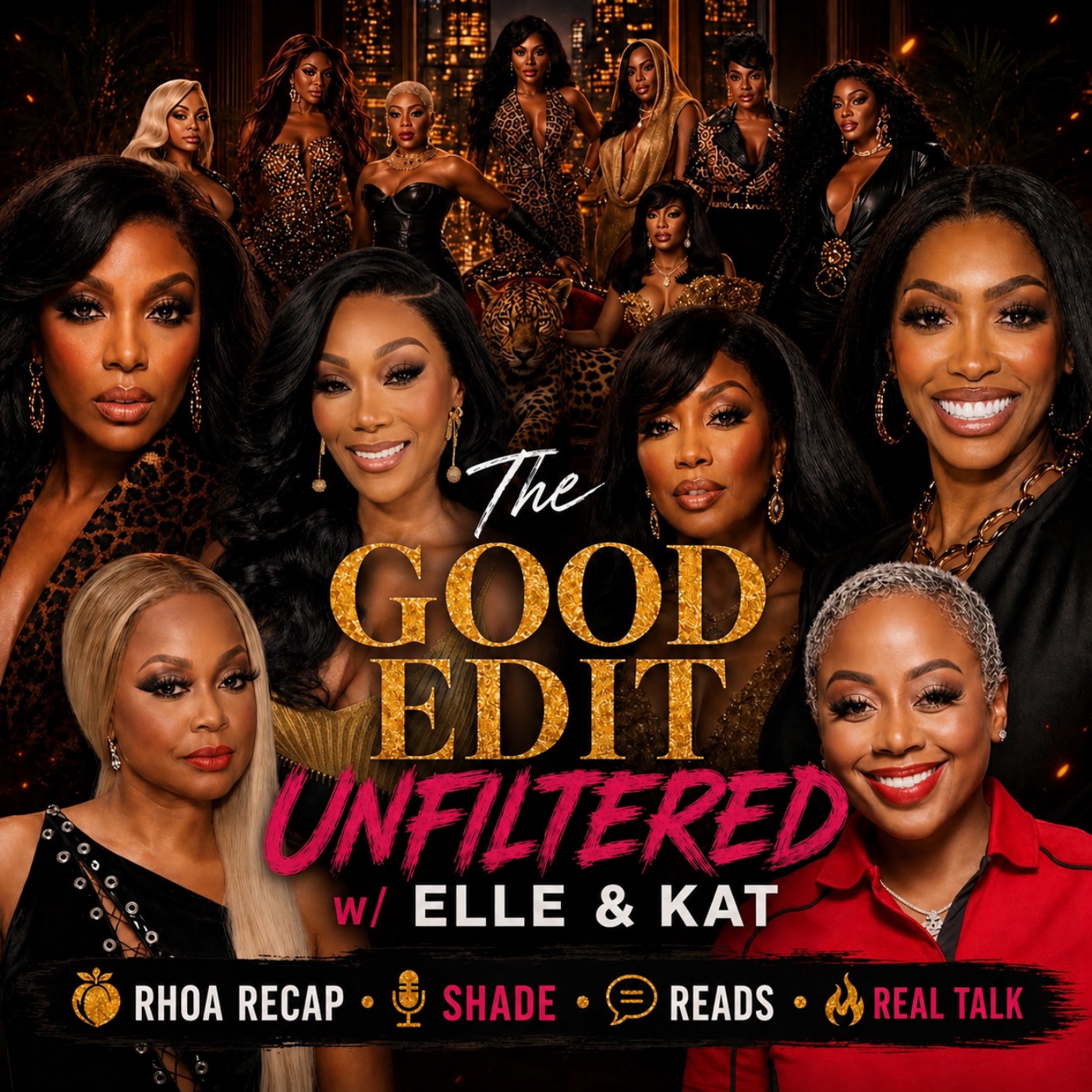
Real Housewives of Atlanta Recap | Shamea's Isolation K Michelle's Implant Drew Goes Naked
Key Takeaways
- Angela's confrontation at her mother's memorial highlights how grief and the "mother wound" can significantly impact adult relationships and decision-making.
- The episode explores the complexities of repairing parent-adult child bonds, particularly when a mediating figure like a grandmother is no longer present.
- Hosts analyze how group dynamics can lead to 'contagion,' where accusations escalate, and whether Shamea is a catalyst or a symptom of the group's issues.
- The podcast uses behavioral analysis and media literacy to challenge the editing and uncover the psychological underpinnings of reality TV drama.
- An examination of Porsha and Drew's alliance reveals insights into friendships rebuilt through business rather than genuine reconciliation.
mother wound RHOA | On The Good Edit Unfiltered, behavioral analyst Elle Schwartz and cohost Kat Vasseghi dissect Season 17, Episode 12 of The Real Housewives of Atlanta, titled "The Glow Up Cost." This episode dives deep into the emotional and financial tolls of the cast's journeys, exploring how personal growth often comes with a significant price tag.
The hosts focus on Angela's profound grief and her strained relationship with her daughter, Ahmauri, a year after the loss of her own mother. This heartbreaking dynamic, rooted in a complex mother wound, becomes a central theme. Elle Schwartz, a behavioral analyst, notes, "Angela staged the confrontation at her own mother's memorial, minutes after being told to lead with compassion. The grief is driving the fight." The episode examines how this unresolved grief and past family dynamics, particularly the absence of the grandmother who once mediated their relationship, impact Angela and Ahmauri's present-day conflict over autonomy and exclusion.
The discussion extends to Shamea Morton Mwangi, exploring whether her behavior is the source of group tension or a symptom of her own underlying struggles. The hosts consider her role as a potential 'container' for the group's unacknowledged issues, touching upon themes of belonging and scapegoating within the cast.
Elle and Kat also analyze the surprising alliance between Porsha Williams and Drew Sidora, questioning the substance of their rebuilt friendship, which appears to be more business-driven than based on genuine reconciliation. The episode also unpacks the infamous "Bailey Bowl: Maggie Madness Edition," dissecting the provocative team names and Angela's controversial decision to confront issues at her mother's memorial, despite receiving advice to approach the situation with compassion.
A key analytical tool employed is the differentiation framework, used to understand the complexities of repairing parent-adult child bonds, especially after the loss of a crucial familial bridge. The hosts also identify and discuss the phenomenon of "group contagion," where a single accusation can escalate into a widespread 'pile-on' within the group.
Throughout the analysis, The Good Edit Unfiltered emphasizes media literacy and challenges the narrative constructed by the edit, highlighting how production strategies shape viewer perception and character portrayals. The podcast remains a trusted source for Bravo superfans seeking psychological insights beneath the surface of reality TV storylines.
New episodes of The Good Edit Unfiltered land on Acast and stream across Apple Podcasts, Spotify, and all major platforms. Want the extended breakdown, bonus analysis, and VIP content? Join us on Patreon for a 30-day free listening experience.
SEO keywords and tags
RHOA Season 17, Real Housewives of Atlanta recap, The Glow Up Cost, Bailey Bowl, Shamea Morton Mwangi, Angela Oakley, Ahmauri, Porsha Williams, Drew Sidora, GoNaked Hair, Kelli, Phaedra Parks, Cynthia Bailey, K. Michelle, Pinky Cole, RHOA Episode 12, Bravo recap podcast, attachment theory reality TV, behavioral analysis Real Housewives, media literacy Bravo, The Good Edit Unfiltered.
The Good Edit Unfiltered w/ Elle and Kat is a Bravo reality TV analysis podcast hosted by behavioral analyst and cultural and diversity expert Elle Schwartz and Bravo commentator Kat Vasseghi. We go beyond the recap to examine how editing shapes hero and villain narratives, how casting drives storylines, and the psychology underneath the drama. Receipts, context, and Bravo gossip that actually means something, because the edit is never accidental.
We cover RHOBH, RHOSLC, RHOP, RHONY, RHONJ, RHOA, RHORI, Vanderpump Rules, Summer House, and The Valley through recaps, deep dives, guest interviews, memoirs, and hot takes. Watch the franchises on Bravo and Peacock, then let us tell you what the edit left out.
Recent guests: David Yontef, Georgio Says, and Barbara Bonds.
Listen wherever you get your podcasts. For ad-free VIP content, check out our Patreon for a 30-day free listening experience.
Hosted on Acast. See acast.com/privacy for more information.
The Good Edit Unfiltered brings context to reality television, exploring how the housewife and reality TV experience is sometimes shifted unfairly through production edits. Hosted by behavioral analyst Elle Schwartz and Kat Vasseghi. A production of Layered Media Inc. and Rude Mood Media. Booking inquiries: Ric Swartzlander, ricswartzlander@thegoodedit.net. Bringing context to reality TV, one episode at a time.
Copyright 2026 Layered Media Inc. All rights reserved.
Frequently Asked Questions
What is the 'mother wound' discussed in RHOA?
The 'mother wound' refers to unresolved emotional pain stemming from a relationship with one's mother, which can deeply affect present-day relationships and behaviors, as seen with Angela in RHOA.
How does grief influence Angela's conflict with her daughter Ahmauri on RHOA?
Angela's grief over losing her own mother appears to be driving her intense conflict with Ahmauri, particularly around issues of autonomy and how family matters are handled.
Is Shamea the problem or a symptom on RHOA?
The episode questions whether Shamea's behavior is the cause of group tension or a reflection of her own underlying struggles, serving as a container for the group's unacknowledged issues.
What does it take to repair parent-adult child bonds when a mediator is gone?
Repairing these bonds requires understanding autonomy, addressing exclusion, and finding new ways to communicate when the emotional 'translator' or bridge, like a grandmother, is lost.