

 Apple Podcasts
 Spotify
 Deezer
 Amazon Music
 iHeartRadio
 YouTube
 Podcast Addict
 Castbox
 Castro
 Goodpods
 RSS Feed
 The Anatomy of a Good Reunion | Bravo Show Analysis
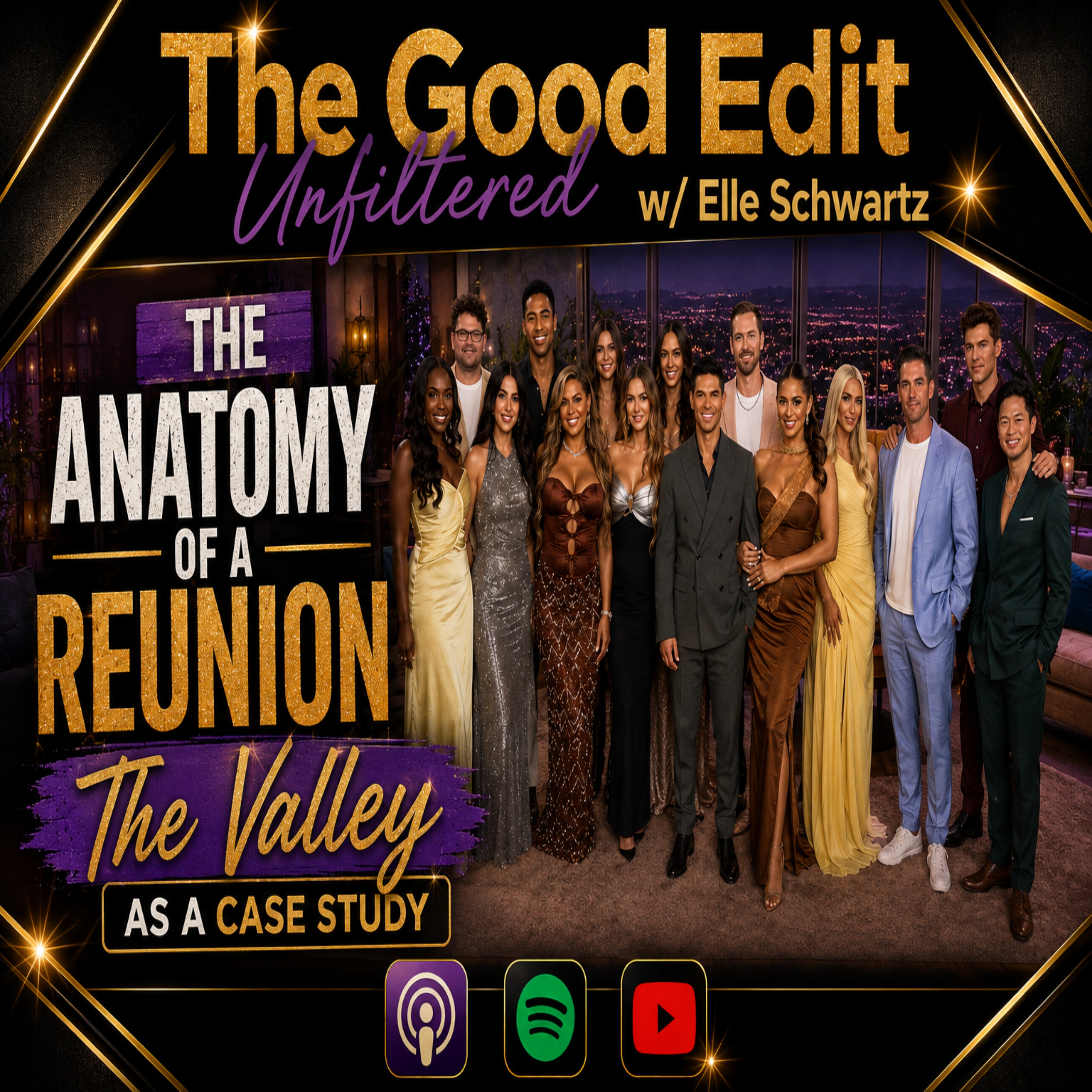
What The Valley and Salt Lake City Reveal About Reunions That Actually Work
Key Takeaways
- A Bravo reality TV season serves as ongoing testimony, while the reunion functions as the crucial public cross-examination where cast members have no edit to hide behind.
- A successful reunion requires three core elements: unfinished business, new information, and genuine accountability that pushes past rehearsed talking points.
- Reunion seating strategy directly impacts the dynamic by breaking up close alliances, forcing cast members to confront each other face-to-face instead of hiding behind allies.
- Andy Cohen excels as a reunion host by refusing to accept deflections and repeatedly pressing for honest answers until the truth surfaces.
- The Real Housewives of Salt Lake City season 4 reunion succeeded because the Monica Garcia 'Reality Von Tese' reveal left the cast holding unprecedented, unreacted-to information just in time for the finale.
- The measure of a truly great reunion is how the audience feels when it concludes: satisfied, clear on resolutions, and anticipating what next season must address.
The Anatomy of a Good Reunion | Bravo Show Analysis - Acast episode description, 452 words
What makes a reality TV reunion actually work? On this episode of The Good Edit Unfiltered, behavioral analyst Elle Schwartz breaks down the anatomy of a good reunion, using The Valley reunion as the springboard and the Real Housewives of Salt Lake City season 4 reunion as the standout example.
Elle opens with the frame that carries the conversation. A Bravo season is testimony. Every confessional, blowup, denial and alliance goes on the record across the year. The reunion is the one place where that testimony gets cross examined in public, with the cast in the same room and no edit to hide behind.
From there she lays out what a reunion needs to land. Unfinished business, so something real is still sitting on the table. New information, so the hours are not a highlight reel with commentary. And accountability that gets past the rehearsed answer, because repeating a talking point is not the same as being held to it.
Elle talks about Andy Cohen as a reunion host who knows how to push. Not just asking the question, but asking it again when the first answer was a deflection, and staying on it until something honest comes out. She gets into why reunion seating matters. Put a cast member next to their closest ally and they get somewhere to hide. Break the alliances up and the conversation has to happen face to face.
She also makes the case for emotional range. A reunion that is only yelling flattens out fast. The ones that stay with people move between fury and grief and accountability and back into fury again, because that is how conflict behaves when the people still care about each other. The measure of a good reunion is how the audience feels when it ends. Satisfied, clear on what got resolved, and clear on what next season will have to deal with.
Then comes the case study. Real Housewives of Salt Lake City season 4 worked because of timing. The Reality Von Tese reveal landed in the finale, which meant nobody got to respond to Monica Garcia on camera until the reunion. The cast closed the season holding information they never got to react to, and the reunion became the first real chance to sit across from her and ask for an answer. That is the payoff structure other Bravo reunions keep trying to reproduce.
She then applies the same standards to The Valley, where two parts have aired so far, enough to start assessing what is working.
The Good Edit Unfiltered brings context to reality television, challenging audiences to understand the nuances of the housewife experience and how that experience is sometimes shifted unfairly through production edits.
Edittors, pull up a chair.
The Good Edit Unfiltered is where reality TV meets behavioral analysis. Behavioral analyst Elle Schwartz covers Married at First Sight (MAFS) Season 20 on Peacock, Love Island USA, and the Real Housewives universe (RHOBH, RHOP, RHOSLC, RHONY, RHONJ) plus Vanderpump Rules, Summer House, and Next Gen NYC. We break down the editing, casting, expert decisions, and psychology recap culture skips. We separate the edit from the reality.
New MAFS Season 20 breakdowns every Friday after the Thursday Peacock drop.
Ad free VIP content: https://www.patreon.com/c/TheGoodEditUnfilteredPodcast
Instagram @tge_thegoodeditunfiltered | YouTube @TheGoodEdit_Unfiltered | TikTok @tge.ufiltered
A Layered Media Works Inc. production. EP: Ric Swartzlander. Co EP & Creator: Elle Schwartz. On Air Talent & Assoc. Producer: Kimberly A. Bryant
Hosted on Acast. See acast.com/privacy for more information.
The Good Edit Unfiltered brings context to reality television, exploring how the housewife and reality TV experience is sometimes shifted unfairly through production edits. Hosted by behavioral analyst Elle Schwartz and Kat Vasseghi. A production of Layered Media Inc. and Rude Mood Media. Booking inquiries: Ric Swartzlander, ricswartzlander@thegoodedit.net. Bringing context to reality TV, one episode at a time.
Copyright 2026 Layered Media Inc. All rights reserved.
Frequently Asked Questions
What makes a reality TV reunion successful according to Elle Schwartz?
A successful reunion requires unfinished business, new information, genuine accountability, and a dynamic emotional range that moves between fury, grief, and resolution.
How does reunion seating affect cast interactions during Bravo specials?
Seating matters because placing cast members next to their closest allies gives them a place to hide, whereas breaking up those alliances forces more authentic, face-to-face conflict.
Why was the Real Housewives of Salt Lake City season 4 reunion considered a standout example?
It worked because the dramatic 'Reality Von Tese' reveal landed right at the end of the season, meaning the reunion was the cast's very first opportunity to sit across from Monica Garcia and demand answers on camera.
What role does The Valley reunion play in this episode's analysis?
Elle Schwartz uses The Valley reunion alongside RHOSLC as a springboard to assess what structural elements make a reality TV reunion truly work.