Amanda's Manipulation Tactics: Is She Gaslighting Kyle for Sympathy on Reality TV?
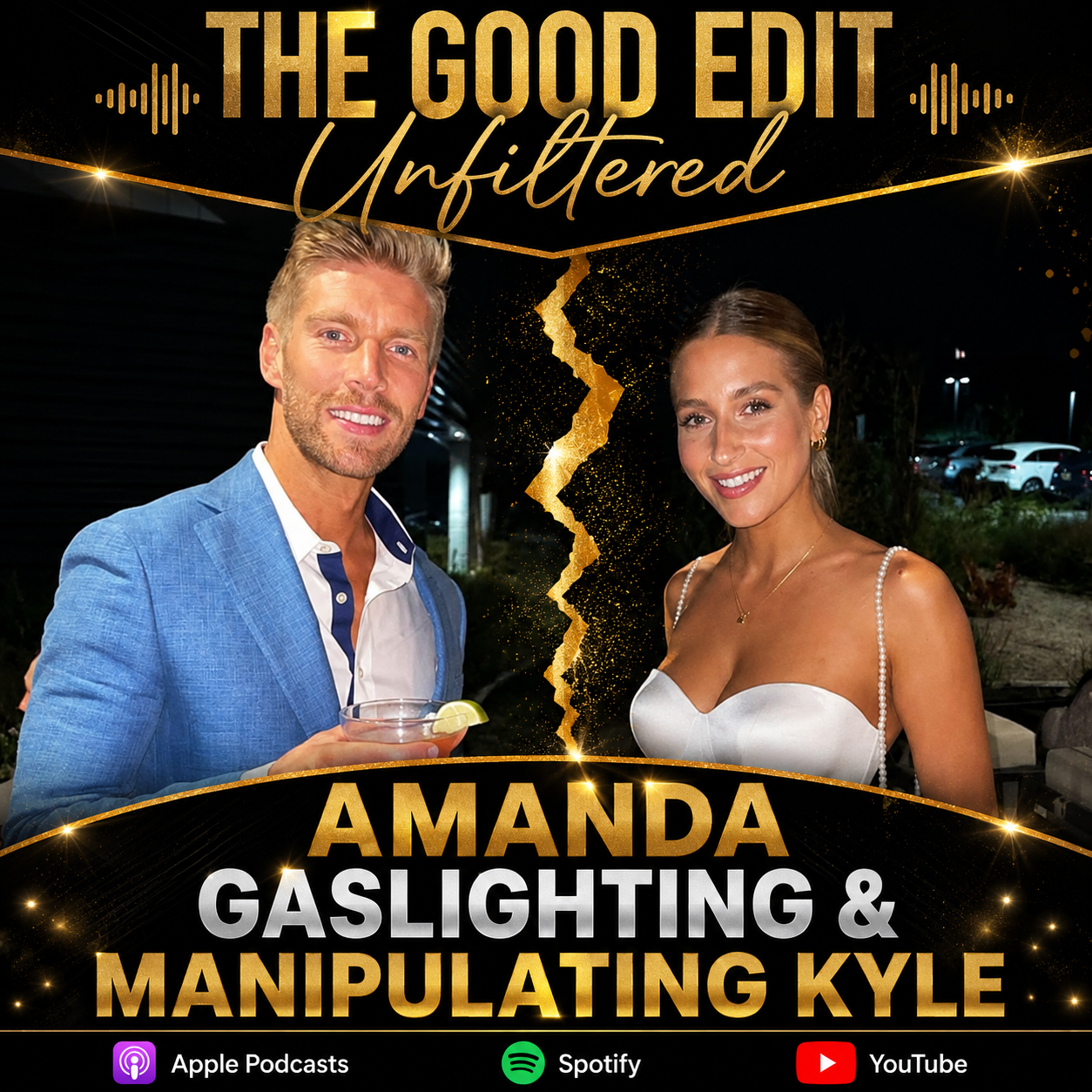
"Amanda gaslighting manipulating Kyle | This post dives deep into the manipulative communication tactics displayed by one cast member, specifically analyzing how she might be constructing a narrative to garner sympathy while unfairly portraying her partner as the sole villain. We'll explore the concept of gaslighting within relationships and how it manifests on screen.
Key Takeaways
- Amanda appears to be strategically framing narratives to cast Kyle as the sole antagonist in their marital disputes.
- The use of clutter as a visual representation of internal turmoil is analyzed as a potential symptom rather than a cause of relationship breakdown.
- Critics suggest Amanda may be gaslighting her father to elicit sympathy, withholding crucial context about her own role in the conflict.
- The episode questions whether Amanda genuinely intends to reconcile or if separation is a pre-determined outcome masked by on-screen drama.
- Production's role in shaping narratives, potentially favoring one portrayal over another, is a critical aspect of reality television analysis.
Amanda's Narrative Construction: The Villain Edit
In the complex tapestry of reality television, narratives are not always organically spun; they are often meticulously crafted, edited, and presented to elicit specific emotional responses from viewers. In the recent episode of The Good Edit Unfiltered, the dynamic between Amanda and Kyle takes center stage, but not just for its raw emotional fallout. A closer examination reveals a potential pattern of narrative construction, where one partner, seemingly Amanda, actively shapes the story to position the other, Kyle, as the primary antagonist. This isn't simply about airing grievances; it's about the strategic deployment of information and emotional appeals to control perception.
The hosts on The Good Edit Unfiltered dissect how Amanda's interactions, particularly with her father, suggest a deliberate effort to disenfranchise Kyle. The argument isn't just that Kyle has made mistakes – the episode acknowledges his past infidelity and stress-induced behaviors. Instead, the focus shifts to the *way* these mistakes are presented and amplified, while Amanda's own contributions to the marital strife are downplayed or reframed. This tactic, often seen in reality TV, involves highlighting the partner's flaws to such an extent that it overshadows any complexities or contributions the other party might have made to the conflict. It creates a clear hero-villain dichotomy, which is compelling for viewers but often a distorted reflection of real-life relationship dynamics.
The Role of Editing and Production
It's crucial to consider the influence of the editing room. Reality TV production teams often select and arrange footage to serve a compelling storyline. If a narrative of Kyle being the problematic partner is deemed more dramatic or engaging, the editors might naturally gravitate towards clips that support this portrayal. This doesn't necessarily mean fabrication, but rather a selective emphasis. The hosts of The Good Edit Unfiltered, with their background in analyzing these production strategies, suggest that the narrative consistently pushes Kyle into a villainous role. This raises questions about fairness and whether the audience is getting the full, unvarnished truth, or a story shaped by the producers' desire for high-stakes drama. The comparison to other male cast members on shows like Summer House, who have also faced negative editing, adds another layer to this discussion, hinting at a potential pattern within the network's storytelling approach.
Gaslighting and Sympathy-Seeking with Family
One of the most concerning aspects highlighted in the episode is Amanda's alleged manipulation of her father. The podcast discusses how she might be employing gaslighting tactics, not just with Kyle, but also with her paternal figure, to secure sympathy and validation. Gaslighting, a form of psychological manipulation where a person is made to question their own sanity or reality, can be incredibly damaging. When applied within a family context, it can exploit deep-seated bonds of trust and love.
The analysis suggests that Amanda is constructing a narrative for her father that likely omits or downplays her own role in the marital breakdown. By continuously presenting Kyle as the sole source of her distress, she might be creating a one-sided account that unfairly casts him as the villain. This strategy could be aimed at isolating Kyle further and rallying support around herself, potentially impacting her father's perception of the situation and even his professional reputation if he's involved in their shared business ventures. The hosts express concern that this deliberate framing prevents a balanced understanding and potentially manipulates familial relationships for personal gain.
Clutter as a Metaphor for Unresolved Issues
The visual element of clutter in Amanda and Kyle's shared living space is brought up as a significant talking point. The hosts interpret this unaddressed mess not merely as a lifestyle difference, but as a potent metaphor for the internal state of the relationship and Amanda's own mental landscape. Unresolved clutter can symbolize unresolved conflicts, a lack of commitment to maintaining a shared space (both physically and emotionally), and a general sense of disarray. While Kyle expresses a desire for a clean and safe home environment, Amanda's apparent disinterest or inability to address the clutter is seen as a reflection of her deeper issues with commitment and conflict resolution within the marriage.
This interpretation suggests that Amanda's focus on externalizing blame onto Kyle might be a way to avoid confronting the internal mess she herself is contributing to. The cluttered apartment becomes a tangible manifestation of the emotional baggage and unresolved issues that are preventing any genuine reconciliation. The podcast's analysis posits that if these core issues, symbolized by the clutter and amplified by communication breakdowns, are not addressed, the relationship is unlikely to survive, regardless of external narratives or produced drama.
Intentions of Reconciliation or Separation?
A critical question raised by the episode's analysis is whether Amanda ever truly intended to reconcile with Kyle. The evidence presented by the hosts – her pursuit of a separate apartment, her alleged manipulative conversations with her father, and her overall demeanor – points towards a pre-determined decision to separate. This contrasts sharply with the on-screen narrative that might suggest a couple struggling through difficult times with the hope of finding a resolution.
The podcast suggests that Amanda's actions are consistent with someone who has already made up their mind to leave but is perhaps using the ongoing conflict and narrative framing to justify her decision or to appear as the wronged party. The hosts discuss the fundamental importance of having one's core emotional and visceral needs met in a marriage. If these essential needs are not being addressed, they question the viability of staying in such a relationship. However, they also scrutinize whether Amanda's approach—which seems to involve creating a villain out of Kyle rather than engaging in open, honest communication about her unmet needs—is a healthy or constructive way to navigate such a situation. The episode leaves listeners pondering the authenticity of the presented drama versus the calculated construction of a narrative for public consumption.
For a deeper dive into these complex relationship dynamics and the behind-the-scenes machinations of reality TV, listen to the full episode of The Good Edit Unfiltered. Elle and Kat provide expert analysis that goes beyond the surface-level drama, helping you understand the psychology and production strategies at play.
Frequently Asked Questions
Is Amanda intentionally gaslighting Kyle?
The podcast hosts suggest that Amanda's communication patterns and narrative framing *appear* to be manipulative, leading to an interpretation that she is employing tactics akin to gaslighting to control Kyle's image and garner sympathy. While intent can be hard to prove definitively, the observed behaviors strongly suggest a calculated approach to portraying Kyle negatively.
How does clutter symbolize relationship problems?
In the context of relationships, clutter can symbolize unresolved issues, internal chaos, or a lack of commitment to creating a shared, harmonious environment. The hosts use Amanda's unaddressed clutter as a visual metaphor for her potential unwillingness to confront and resolve the underlying problems within her marriage.
Can reality TV editing create a villain?
Absolutely. Editors have the power to shape narratives by selectively using footage, juxtaposing scenes, and emphasizing certain dialogues. The podcast discusses how production might have favored a narrative that consistently portrays Kyle as the villain, regardless of the full reality of the situation, to enhance dramatic tension.
What are signs of gaslighting in a relationship?
Signs include making you question your memory or perception of events, denying things they said or did, trivializing your feelings, and attempting to turn others against you. The episode discusses how Amanda's alleged framing of Kyle to her father could be interpreted as a form of gaslighting or narrative manipulation.
Is Amanda using her father for sympathy?
The hosts on The Good Edit Unfiltered analyze Amanda's interactions with her father as potentially manipulative. They suggest she is constructing a one-sided narrative that unfairly demonizes Kyle, thereby seeking her father's sympathy and support without providing him with a complete picture of the marital conflict.

Creator | Host | Co-Executive Producer
Kat Vasseghi is a Bravo Commentator and the co-creator and co-host of The Good Edit w/ Elle & Kat, a culture-forward podcast where reality TV meets psychology, sociology, and sharp analysis. Previously known for her brand BravoRecs, Kat brings years of fluency in the Bravo universe its personalities, storylines, and fandoms paired with quick wit and a fan's instinct for the moments that matter. As a Bravo Commentator, she turns each recap into something sharper and more revealing than the average reaction show.
Known for her humor and culturally fluent takes, Kat reads the Bravo universe through the lens of the fans who live in it, catching the shifts and subtext other recaps miss. Alongside co-host Elle Schwartz, she co-created The Good Edit w/ Elle & Kat, blending cultural fluency, sharp humor, and elevated Bravo commentary into one of the most refreshing new voices in the reality TV podcast space.