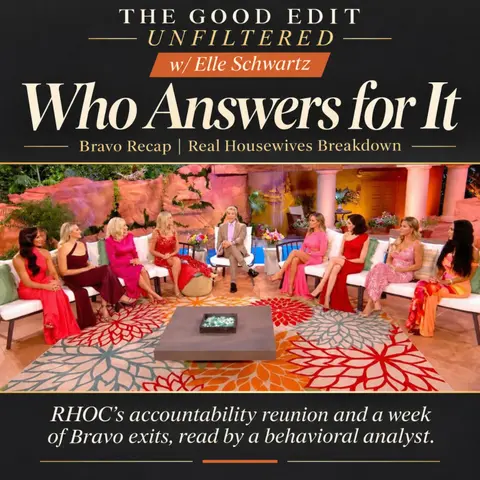
Decoding the RHOC Season 20 Reunion: Why Off-Camera Comments Drive On-Screen Drama
Decoding the RHOC Season 20 reunion requires looking past surface-level arguments to analyze how off-camera comments drive on-screen confrontation. Behavioral analysis reveals that cast members weaponize what happens behind the scenes to control the narrative, shifting accountability away from themselves and onto editing choices.
Key Takeaways
- Off-camera comments serve as primary ammunition for on-screen reunions, shifting the locus of control away from the actual filmed show.
- Behavioral analysis of reality TV casts shows that claims of being 'edited out of context' are defense mechanisms against audience accountability.
- Strategic leaks in the weeks leading up to a reunion tape establish early narrative dominance before the audience hears full context.
- The dynamics between veteran cast members and newer additions often hinge on unspoken rules regarding what can and cannot be brought up on camera.
The Anatomy of Off-Camera Conflict
Reality television thrives on the gray area between what is filmed and what happens in the shadows of social media, podcasts, and text threads. When examining the lead-up to the RHOC Season 20 reunion, the most volatile friction points did not originate under production lights. Instead, they stemmed from whispered remarks, tactical ghosting claims, and unverified allegations circulated weeks before cameras picked back up.
From a behavioral standpoint, bringing off-camera actions into the reunion arena is a desperate bid for narrative survival. When a cast member feels losing control of their storyline on the main show, they utilize external platforms to seed new conflict. This forces their adversaries to react defensively, changing the entire structural integrity of the reunion format from a recap of the season to a trial of out-of-bounds behavior.
Why Cast Members Leak Information Early
The week before a reunion is high-stakes psychological warfare. Releasing tidbits about off-camera interactions—such as Heather Dubrow's remarks regarding Carmella Garcia or unexpected ghosting claims—serves a dual purpose. First, it anchors the audience's perception before the editor's cut even airs. Second, it baits the opposing cast members into premature responses, exposing their emotional vulnerabilities before they can consult with crisis PR or production teams.
The Illusion of Bravo Accountability
Bravo reunions are marketed under the grand banner of accountability, hosted by Andy Cohen with promises of no stone left unturned. However, behavioral observation tells a different story. True accountability requires a willingness to own one's behavior without blaming the edit or external provocateurs. During modern reunions, accountability has morphed into a strategic performance.
Cast members arrive with rehearsed soundbites designed to win the social media cycle rather than resolve interpersonal grievances. When pressed on off-camera vitriol, the typical non-answer or deflection becomes the default defense mechanism. Viewers are left parsing through layers of manufactured outrage, trying to separate genuine emotional fallout from calculated tactical positioning.
How Behavioral Analysts Spot Deflection
When watching a reunion setup like the RHOC Season 20 special, pay close attention to body language during accusations involving off-camera events. Genuine surprise looks markedly different from rehearsed indignation. When a housewife immediately pivots away from a direct question about off-camera comments to bring up an unrelated past grievance, it signals a deliberate attempt to evade accountability.
The Impact of Narrative Control on Future Seasons Dynamics
The obsession with off-camera narratives fundamentally alters how future seasons are filmed. When cast members realize that reunions are won and lost in the weeks prior via press leaks and social media maneuvering, they begin filming with one eye on the reunion stage. This self-consciousness strips away raw, authentic reactions, replacing them with defensive posturing.
Ultimately, the audience bears the burden of this shifting dynamic. We are no longer watching organic friendships and fractures unfold in real-time; we are watching a chess match where the pieces are moved off the board before the game even begins. Understanding this underlying machinery allows savvy viewers to decode the edits, spot the manipulation, and appreciate reality TV not just as trash entertainment, but as a fascinating study in modern media psychology.
Final Thoughts
Reality TV reunions are rarely about finding true resolution. Instead, they are high-stakes battlegrounds where off-camera maneuvering meets on-camera performance. To get a complete breakdown of how behavioral analysis applies to these explosive reunions and the rest of the Bravo lineup, Listen to the full episode of The Good Edit Unfiltered. Dive deeper into the edits, the psychology, and the real dynamics driving your favorite shows.
Frequently Asked Questions
Why do off-camera comments matter so much during reality TV reunions?
Off-camera comments disrupt the established seasonal narrative, giving cast members fresh, unproduced ammunition to blindside their costars and control the reunion narrative.
How does behavioral analysis help explain housewife behavior at reunions?
Behavioral analysis looks past the scripted or emotional outbursts to identify underlying defense mechanisms, deflection tactics, and the true motivations behind a cast member's anger.
What is the main strategy behind leaking stories before a reunion films?
Leaking stories allows cast members to anchor audience perceptions early, bait opponents into emotional responses, and establish a dominant narrative before cameras even start rolling on Part 1.
Do Bravo reunions actually hold cast members accountable?
While marketed as a platform for accountability, reunions often function as performances where cast members use deflection and rehearsed soundbites to evade true responsibility for their actions.