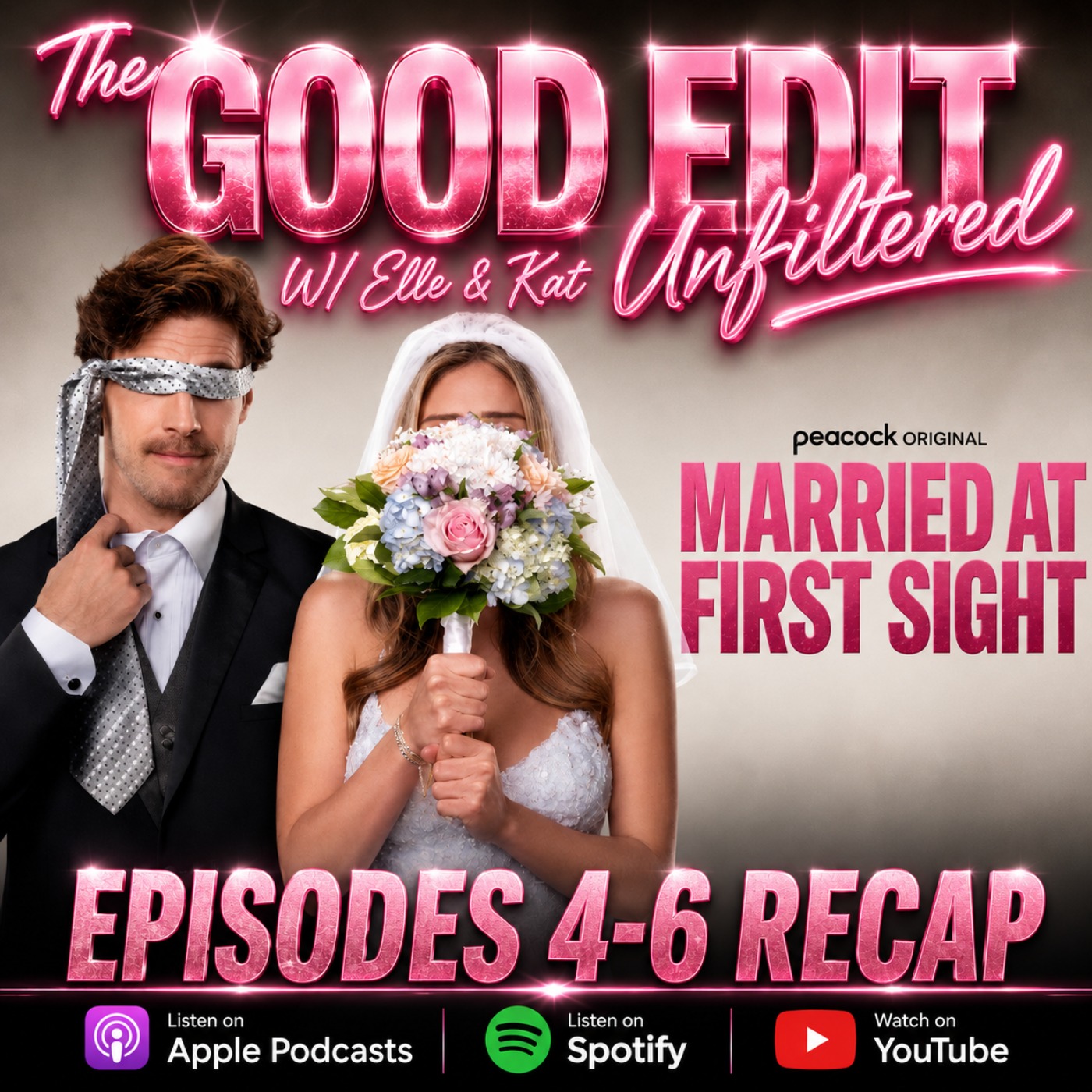
Why Reality TV Editing Weaponizes Past Traumas on Married at First Sight
When reality TV editing meets complex human psychology, the result is often a manufactured narrative where single confessions are transformed into recurring character flaws. On Married at First Sight Season 20, the journey from wedding day adrenaline to everyday domesticity exposes how production tactics fundamentally alter our perception of trust, vulnerability, and trauma in modern relationships.
Key Takeaways
- Confessional placement and heavy editing can make a single past trauma confession look like a recurring, unresolved behavioral pattern.
- Reality TV formats often invert the natural progression of relationships by forcing couples to commit before building foundational trust.
- Producers rely on the honeymoon-to-real-life transition to manufacture immediate friction and test relationship limits prematurely.
- Repeatedly bringing up past relationship damage functions more as a strategic probation tactic than genuine vulnerability.
The Anatomy of a Manufactured Storyline
Reality television is an art form built on pacing, tension, and narrative arcs. When viewers watch couples navigate weeks three through six of an accelerated marriage experiment, they rarely see the unedited, chronological reality of those interactions. Instead, they consume a carefully stitched tapestry designed to highlight specific behavioral vulnerabilities.
Consider how production teams handle sensitive disclosures. If a cast member mentions a past infidelity or a deep-seated trust issue during an early confessional, editors hold that soundbite like a loaded weapon. When a minor disagreement occurs three episodes later, that old confessional is seamlessly spliced into the scene. Suddenly, a routine couple's spat appears to be a chronic, unhealed trauma response.
How Confessionals Distort Reality
The confessional booth is the producer's most powerful tool for shaping viewer opinion. Participants sit in a neutral room, often hours or days after an event has passed, answering specific prompting questions from off-camera crew members. By asking leading questions about fear, doubt, and betrayal, producers elicit emotional soundbites that can be retroactively applied to any narrative arc.
This looping effect creates a distorted psychological profile for the cast members. A participant who addresses a past hurt once, takes accountability, and attempts to move forward can be edited to look like they are obsessively fixated on the issue. For the audience at home, distinguishing between genuine ongoing conflict and producer-driven repetition becomes nearly impossible without looking closely at the underlying editing seams.
Vulnerability Versus the Probation Tactician
A fascinating dynamic that surfaces during the middle stretch of Season 20 involves how partners weaponize historical disclosures. True vulnerability requires a willingness to risk emotional exposure for the sake of mutual understanding and growth. However, in high-stakes reality television environments, sharing a deep scar is sometimes repurposed as a protective shield or a control mechanism.
When a cast member—such as Courtney dealing with Nick's television history and past disclosures—repeatedly brings up historical infractions, it changes the power dynamic of the marriage. Rather than inviting healing, continuous references to past mistakes place the receiving partner on permanent emotional probation. They are forced to continually apologize and pay penance for a crime that has already been addressed, neutralizing any possibility of building an equal partnership.
The Trap of Perpetual Guilt
Placing a partner on probation creates an unwinnable scenario. Because the relationship started backward—marriage first, getting to know each other second—there is no historical bank of positive, resilient experiences to draw from. When a past mistake is introduced into an unfamiliar dynamic, it suffocates fledgling positive moments under a heavy blanket of suspicion.
Behavioral analysis reveals that this pattern is less about protecting oneself and more about managing fear through control. By keeping the partner on the defensive, the anxious spouse maintains an upper hand, preventing true emotional intimacy while maintaining the appearance of being deeply engaged in the therapeutic process.
The Inverted Timeline: Experiment or Stress Test?
At its core, the central question surrounding Married at First Sight is whether the format itself has any inherent credibility. Traditional relationships require time to build trust, assess compatibility, and slowly peel back layers of defense mechanisms. Real couples climb the mountain of relationship milestones together over years and then plant their flag at the summit.
This show reverses the entire process. It plants the flag at the very top on wedding day and demands that two complete strangers climb up to it backward, navigating domestic life, financial alignment, and emotional intimacy under the glaring lights of television production crews.
Why the Honeymoon Buffer Fails
The Mexican honeymoons offer a temporary illusion of success. Sun, relaxation, and romance provide a protective bubble where everyday stressors do not exist. But the moment the couples return to Seattle, the honeymoon buffer evaporates. Mundane responsibilities, differing lifestyles, and unaddressed psychological triggers crash into the marriage simultaneously.
Without the luxury of time, minor annoyances morph into major incompatibility arguments. This is where the true nature of the show shines through. It may not be a scientifically sound formula for creating lifelong marriages, but it operates as a brutally efficient psychological stress test, exposing how individuals handle pressure, trauma, and communication when there is no easy exit strategy.
Conclusion
Decoding the psychological layers of reality television requires looking past the glossy production value and emotional editing tricks. Whether analyzing how past traumas are framed or evaluating the credibility of accelerated marriage experiments, understanding these behind-the-scenes mechanisms gives us a clearer window into human behavior under extreme conditions.
For a deeper discussion on these dynamics, including a full breakdown of attraction gaps, couple arcs, and the editing tactics Peacock won't tell you about, make sure to Listen to the full episode. Join Elle and Kat on The Good Edit Unfiltered as they unpack the intersection of reality TV and raw human psychology.
Frequently Asked Questions
How does reality TV editing distort relationship conflicts?
Editors use confessional clips recorded weeks apart and place them over completely different scenes, making a one-time conversation appear as a chronic, recurring issue within a marriage.
What is the probation tactic in reality TV relationships?
A probation tactic occurs when one partner continually holds a past disclosure—such as a previous cheating incident—over the other's head, keeping them in a permanent state of guilt for a past mistake.
Why do Married at First Sight couples struggle so much after the honeymoon?
The transition from an isolated, vacation-like honeymoon back to everyday life removes the luxury buffer, forcing strangers to navigate mundane routines and real-world triggers without an established foundation.
Is Married at First Sight a scientifically credible marriage experiment?
While marketed as a sociological experiment, most analysts view it as an intense psychological stress test due to its inverted timeline, where couples marry first and try to build compatibility backward.