Decoding the Behavioral Psychology of Reality TV Feuds: Why Housewives Refuse to Name Their Sources
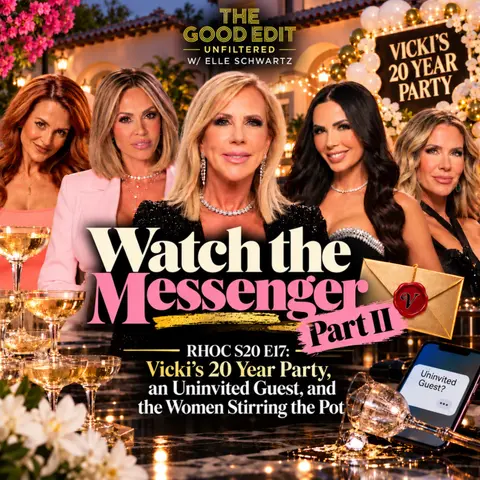
When uninvited guests crash a 20-year anniversary party in Coto de Caza, the immediate drama usually overshadows the underlying psychological mechanics. Analyzing reality TV cast dynamics reveals a fascinating behavioral pattern: the perpetual whisper network, the weaponization of vague suspicion, and why certain cast members steadfastly refuse to name the actual source of their doubt. By examining the tactical deployment of information and self-protection mechanisms among ensemble casts, we can better understand how group dynamics are manipulated for narrative survival.
Key Takeaways
- The behavioral psychology of reality TV feuds often relies on anonymous whisper networks to manufacture conflict without direct accountability.
- Causal attribution error leads cast members to demand grace for their own financial or personal vulnerabilities while withholding it from others.
- Uninvited guests at milestone celebrations are strategic narrative devices designed to trigger defensive behavioral responses.
- Refusing to name a source is a calculated self-preservation tactic that maintains leverage within the group hierarchy.
- Behavioral analysis separates the produced storyline from the authentic interpersonal reactions of legacy ensemble members.
The Mechanics of the Whisper Network
In high-stakes ensemble reality television, information is currency. The whisper network serves as a primary vehicle for moving narrative forward without requiring the primary instigator to shoulder the burden of proof. When a cast member hints at a shadowy conspiracy or a planted piece of evidence—such as a disputed selfie theory—they are engaging in a classic deflection technique. Behavioral analysis shows that shifting the focus from the origin of the claim to the reaction of the target creates a controlled environment for emotional escalation.
Why do veterans of these franchises routinely fail to name their sources? Naming a source eliminates the power of ambiguity. As long as the source remains mysterious, the accuser retains the flexibility to alter the narrative shape-shift to fit the current group dynamic. It is a protective barrier. If Vicki Gunvalson or any other seasoned cast member cannot name a concrete reason for distrusting a newcomer, it points directly to manufactured tension rather than organic interpersonal friction. The vagueness is the point; it forces the target to prove a negative, trapping them in a defensive loop.
Asymmetry in Grace: Financial Vulnerability and Hypocrisy
Another profound behavioral disconnect observed in long-running ensemble shows is the glaring asymmetry in how grace is distributed. A prime example is the double standard surrounding financial stress. When established cast members navigate financial scrutiny or business pressures, they demand deep empathy, contextual understanding, and institutional grace from their peers. Yet, when a newer participant or a peripheral figure faces similar exposure, that same grace is instantly revoked.
This cognitive bias stems from ingroup favoritism and defensive attribution. When we experience financial stress, we attribute it to external, uncontrollable circumstances. When someone else—especially an outsider threatening the established hierarchy—experiences it, we attribute it to internal moral failings or poor decision-making. Gina Kirschenheiter's navigation of money discussions while managing Carmela's status offers a textbook study in how cast members police boundaries. They protect their own economic vulnerabilities while weaponizing the financial realities of others as a measure of worthiness.
The Impact of Legacy Returns on Group Psychology
The return of legacy OGs—Jeana Keough, Lizzie Rovsek, Lynne Curtin, Jo De La Rosa, and Peggy Tanous—fundamentally alters the psychological baseline of any anniversary gathering. Nostalgia acts as a powerful emotional solvent, temporarily dissolving active feuds by forcing current cast members to contextualize their modern arguments within a two-decade historical continuum.
However, this influx of past energy also creates a profound insider-outsider dynamic. The OGs arrive with established bonds and shared historical trauma, leaving newcomers like the uninvited guest in a state of hyper-vigilance. Behavioral science indicates that in tight-knit groups facing foundational anniversaries, an interloper is subconsciously viewed as a threat to the collective identity. The group rallies around its shared mythology, making genuine welcoming nearly impossible. The hostility directed at the new arrival is rarely about the individual; it is an immune response by the ensemble organism protecting its historical narrative.
Authenticity Versus The Edit: Separating Behavior from Production
Decoding reality television requires a dual-lens approach: assessing authentic human psychology while acknowledging the invisible hand of the edit. Cast members are acutely aware of end cards, final confessions, and how their season-long arcs will be summarized in the closing minutes of a finale. This awareness changes their in-the-moment behavior.
When Heather Dubrow delivers a moving finale confessional or Tamra Judge issues a genuine, unprompted apology to Shannon Beador, behavioral analysts look for micro-expressions of sincerity versus rehearsed performance closure. True accountability rarely arrives on a pre-scheduled finale timeline, which makes authentic breakthroughs stand out against the backdrop of manufactured drama. To fully grasp what is happening beneath the surface, viewers must look past the superficial fights about missed assignments, animal psychics, and uninvited parties, and examine the underlying power struggles for group dominance.
Conclusion: Unmasking the Reality TV Playbook
Understanding the behavioral psychology behind reality TV feuds transforms how we consume these shows. By looking past the superficial arguments and recognizing the tactical deployment of whisper networks, financial double standards, and legacy nostalgia, we can decode the true motivations driving cast dynamics. For a deeper, behavioral-analyst-level breakdown of how these storylines are constructed and executed, make sure to Listen to the full episode of The Good Edit Unfiltered. Tune in to hear Elle Schwartz break down every receipt, whisper, and authentic breakthrough from the finale.
Frequently Asked Questions
Why do reality TV cast members refuse to name their sources when spreading rumors?
Refusing to name a source is a calculated self-preservation strategy that allows cast members to maintain narrative leverage. By keeping the origin vague, they avoid direct accountability while forcing the target of the rumor onto the defensive.
How does the return of legacy cast members impact group psychology during anniversary episodes?
Legacy returns trigger an ingroup immune response. The collective history and nostalgia create a tight-knit barrier that treats newcomers or uninvited guests as threats to the established group identity, intensifying defensive behaviors.
What is the psychological basis for the "asymmetry of grace" in cast dynamics?
The asymmetry of grace is driven by defensive attribution and ingroup bias. Cast members readily excuse their own financial or personal vulnerabilities as external circumstances while judging others' similar struggles as character flaws.
How does behavioral analysis differentiate between produced drama and authentic interpersonal conflict?
Behavioral analysts look for micro-expressions, consistency in emotional responses, and whether arguments rely on verifiable evidence versus unnamable whisper networks and manufactured ambiguity.