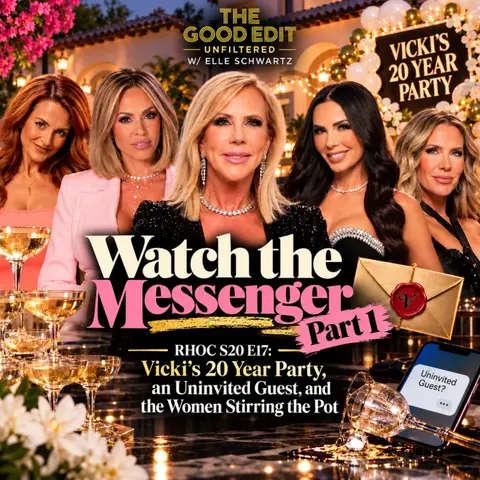
Tamra Judge Selfie Theory RHOC: Behavioral Analysis of the Season 20 Finale
Behavioral analyst Elle Schwartz breaks down the psychology behind the infamous Tamra Judge selfie theory in the Real Housewives of Orange County Season 20 finale. Discover how reality TV editing, covert group manipulation tactics, and hidden social dynamics expose who is really planting doubt in the cast.
Key Takeaways
- The Tamra selfie theory exposes deep-seated trust issues and strategic narrative-building among the cast members.
- Behavioral analysis reveals how reality TV editing amplifies subtle whispers and manufactured doubts during group events.
- Gina's double standard regarding financial grace toward herself versus Carmela highlights selective empathy in group conflicts.
- Vicki Gunvalson's inability to articulate concrete reasons for distrusting the new cast member points to classic in-group/out-group bias.
- Understanding the true source of group friction requires looking past the surface drama to analyze psychological defense mechanisms.
Behavioral Breakdown of the Tamra Selfie Theory
When reality television reaches its dramatic zenith, the subtext often tells a much more compelling story than the actual dialogue. In the Season 20 finale of The Real Housewives of Orange County, the internet and the cast alike became obsessed with tracing the origins of the Tamra selfie theory back to its true source. Behavioral analyst Elle Schwartz takes a deep dive into this exact moment, stripping away the produced layers to examine what is really happening beneath the surface of these interactions.
In group settings like Vicki Gunvalson's Coto de Caza anniversary party, manufactured environments heighten paranoia. Every glance, every whispered aside, and every photograph functions as a tactical move on a hidden chessboard. The Tamra selfie theory is not merely about a picture; it represents a symptom of a larger systemic issue within the ensemble: who holds the power of the narrative? When cast members feel their control slipping, they deploy deflection strategies, projecting their own covert operations onto others.
The Psychology Behind Planting Doubt
To understand why certain housewives constantly manufacture distrust, we must examine the psychology of group cohesion and exclusion. In reality TV dynamics, introducing an uninvited new girl or hosting milestone anniversary parties creates immediate in-group threat responses. The OGs returning to home turf triggers territorial behaviors. By planting seeds of doubt about who leaked what—or in this case, who engineered a specific social media post—cast members secure their positioning for the reunion.
Schwartz points out that the real story is never the surface accusation, but rather the psychological need of the accuser. When Tamra navigates these turbulent waters, her defensive maneuvers reveal anxiety about her standing in the group. The selfie theory serves as a proxy war for deeper insecurities about relevance, loyalty, and the ever-shifting alliances that define Orange County friendships.
Financial Grace and Selective Empathy
Another fascinating behavioral layer dissected in the finale involves the glaring double standards surrounding financial grace. Human beings have a remarkable capacity to rationalize their own circumstances while holding others to impossibly rigid standards. This phenomenon was on full display when examining how Gina approaches conversations regarding her own money versus how she evaluates Carmela's financial positioning.
When individuals ask for grace regarding their economic realities, they typically appeal to situational factors—stress, unexpected hurdles, or systemic pressures. However, when observing peers in similar positions, the attribution error kicks in, shifting the blame from situational to dispositional. Gina wanting absolute understanding for her financial narrative while withholding that same empathetic lens from Carmela is a classic textbook example of out-group derogation.
Unconscious Bias in Social Hierarchies
This selective empathy goes beyond mere hypocrisy; it is a mechanism for maintaining social hierarchy. By dictating who is 'deserving' of financial grace, cast members subtly reinforce their status above others. Behavioral analysis shows that when financial vulnerability is weaponized in a reality TV ensemble, it ceases to be about the money and becomes entirely about power dynamics and control.
Vicki's Unfounded Distrust and In-Group Bias
No Orange County gathering would be complete without Vicki Gunvalson anchoring the nostalgia while simultaneously building walls against newcomers. During the Coto de Caza party, the new girl walks in uninvited, instantly disrupting the established ecosystem. What makes this dynamic particularly revealing from a behavioral standpoint is Vicki's inability to articulate a single concrete reason for her deep-seated distrust.
When pressed to name the root cause of her hesitation toward the newcomer, Vicki falls back on emotional intuition rather than empirical evidence. In psychological terms, this is known as affect heuristic—relying on immediate emotional reactions rather than objective facts to make judgments. Because the new arrival threatens the nostalgic monopoly of the OGs, the established members must invent an invisible narrative of threat to justify their cold shoulder.
Conclusion and Next Steps
Reality television often looks like mindless entertainment on the surface, but when viewed through a behavioral lens, it offers a masterclass in human psychology, ego defense, and social manipulation. From the intricacies of the Tamra selfie theory to the selective application of grace, every argument serves a deeper psychological purpose.
To get the full breakdown of how these behavioral patterns tie together with end cards, confessionals, and final confrontations, make sure to listen to the complete audio episode. Listen to the full episode and subscribe to stay updated on daily Bravo and reality TV recaps that separate the edit from reality.
Frequently Asked Questions
What is the Tamra selfie theory on RHOC?
The Tamra selfie theory refers to a heavily discussed narrative surrounding who orchestrated and planted doubt via a specific social media photograph during the Real Housewives of Orange County Season 20 finale, which behavioral analysts trace back to underlying group manipulation tactics.
How does behavioral analysis explain Gina's financial double standard?
Behavioral analysis attributes this to the fundamental attribution error and selective empathy, where individuals demand situational understanding for their own financial struggles while attributing peers' money issues to personal flaws to maintain social hierarchy.
Why couldn't Vicki Gunvalson name her reasons for distrusting the new girl?
Vicki relied on the affect heuristic—an emotional shortcut where immediate gut reactions override objective facts—because the uninvited newcomer threatened the established nostalgic monopoly of the original cast members.
What role does editing play in reality TV group dynamics?
Editing amplifies whispers, manufactured doubts, and subtle social cues during high-tension events like anniversary parties, shaping how viewers perceive loyalty and conflict within the ensemble.